
Before relying on a dehumidifier setting alone, measure indoor humidity first and look at the trend alongside condensation and ventilation.
A dehumidifier can be useful when indoor moisture is temporarily high, when drying laundry indoors, or while a damp room is drying out. It is not a substitute for repairing leaks or providing required ventilation.
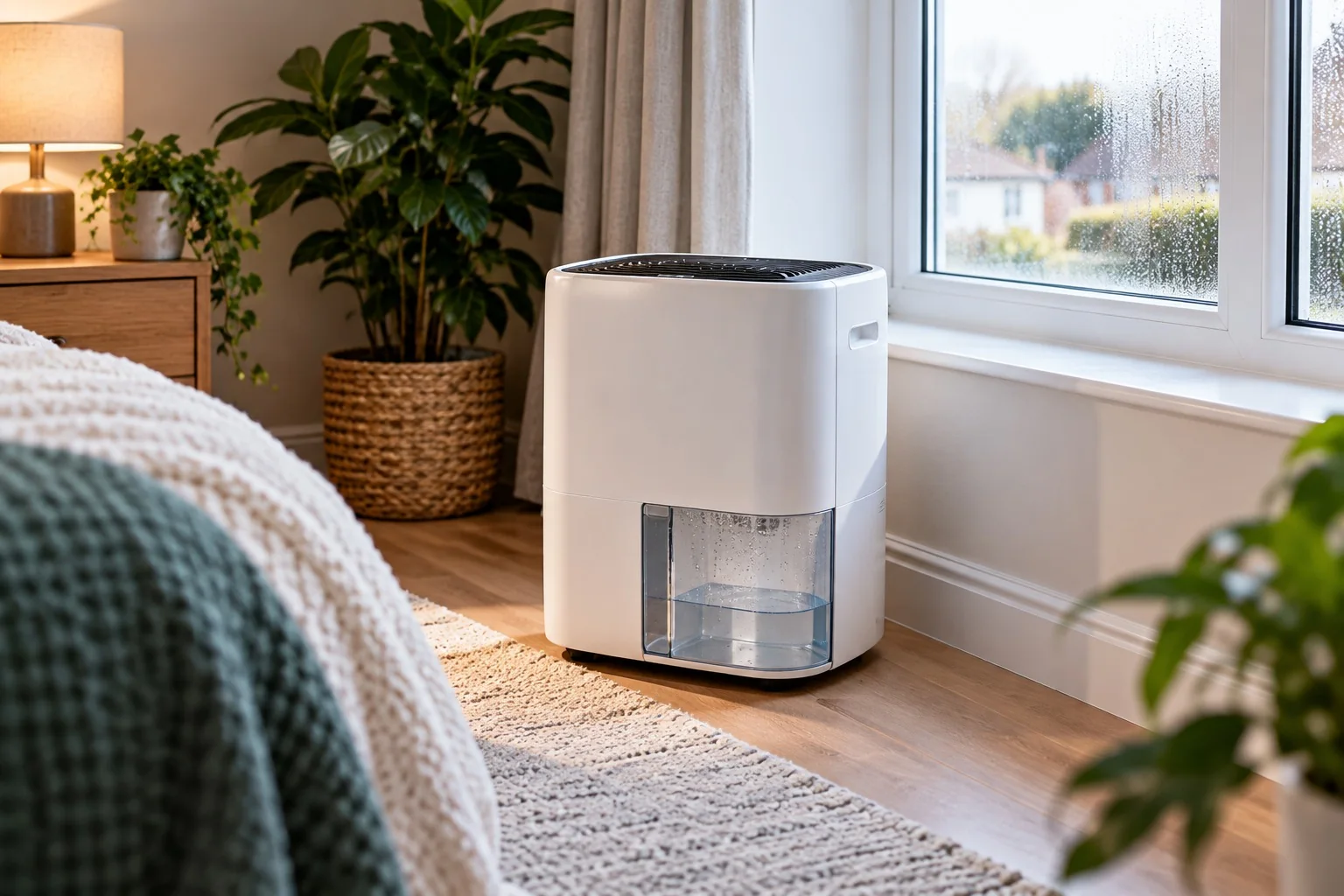
What this usually means
A dehumidifier is most useful when the problem is genuinely high air humidity. If one wall is wet, plaster is damaged or moisture appears after rain, investigate the building defect first.
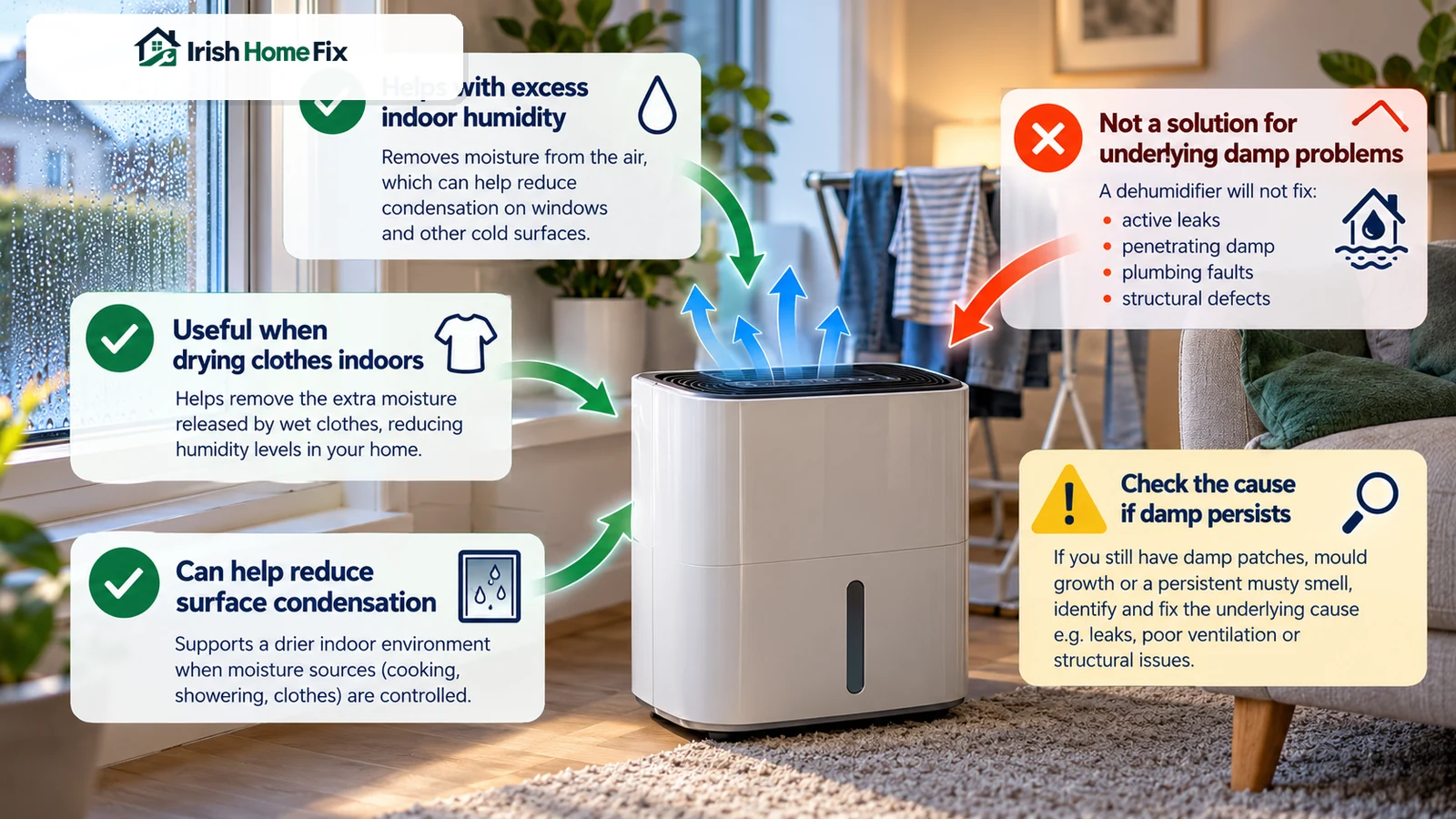
A dehumidifier is a moisture-removal tool, not a building repair
A dehumidifier can be useful when the air itself is carrying excess moisture: during indoor clothes drying, after a leak has been repaired, in a temporarily damp room or when ventilation alone is not keeping humidity under control. It can make a room more comfortable and reduce the time surfaces stay wet.
It is less useful when the real problem is water entering through a roof, wall or plumbing system. In that situation the machine may collect litres of water while the defect continues. The right question is therefore not only “will it lower humidity?” but also “why is this moisture here?”
Likely causes
- Seasonal indoor humidity during colder weather.
- Indoor laundry drying.
- Bathrooms or kitchens that release a lot of moisture.
- Drying after minor water damage once the source has been stopped.
- Poor ventilation that still needs to be corrected.
Safe checks to make first
- Measure humidity before deciding whether a dehumidifier is needed.
- Confirm there is no active leak or penetrating damp.
- Check existing vents and extract fans first.
- Choose a location with reasonable air circulation and follow the manufacturer's clearance instructions.
- Empty or drain the unit safely and keep filters maintained.
What to do today
- Confirm there is no active leak or rainwater entry before treating the problem as humidity alone.
- Choose a location with reasonable air circulation and follow the manufacturer’s clearance and drainage instructions.
- Use a hygrometer or the unit’s humidistat to avoid running it longer than necessary.
What not to do
- Do not block ventilation because a dehumidifier is running.
- Do not route drain hoses where they can leak, trip someone or cause hidden water damage.
- Do not expect a small portable unit to correct serious building damp or extensive water damage.
When to get someone qualified involved
- You suspect a leak, rising/penetrating damp or damaged building fabric.
- Mould is extensive or recurring.
- The home relies on mechanical ventilation that is not operating correctly.
- Electrical equipment would have to be used in an unsafe wet location.
Irish-home context
Official Irish guidance emphasises ventilation and moisture removal at source. A dehumidifier can be a useful supplementary tool, but required vents and extract systems should not be disabled simply because a dehumidifier is present.
Frequently asked questions
Can a dehumidifier stop window condensation?
It can reduce airborne moisture and may reduce condensation, but cold surfaces, ventilation and moisture production still matter. If the underlying balance is poor, condensation can return when the unit is off.
Should I run a dehumidifier all day?
Not automatically. Use humidity control and actual room conditions. Many modern units cycle on and off as the target humidity is reached.
Does a dehumidifier replace an extractor fan?
No. Extracting moisture at source in kitchens and bathrooms is usually more direct. A dehumidifier can be a supplement, not a substitute for required ventilation.
Guidance and references
Irish Home Fix uses these references for general context. This guide is not a substitute for a site-specific building, electrical, plumbing or medical assessment.