
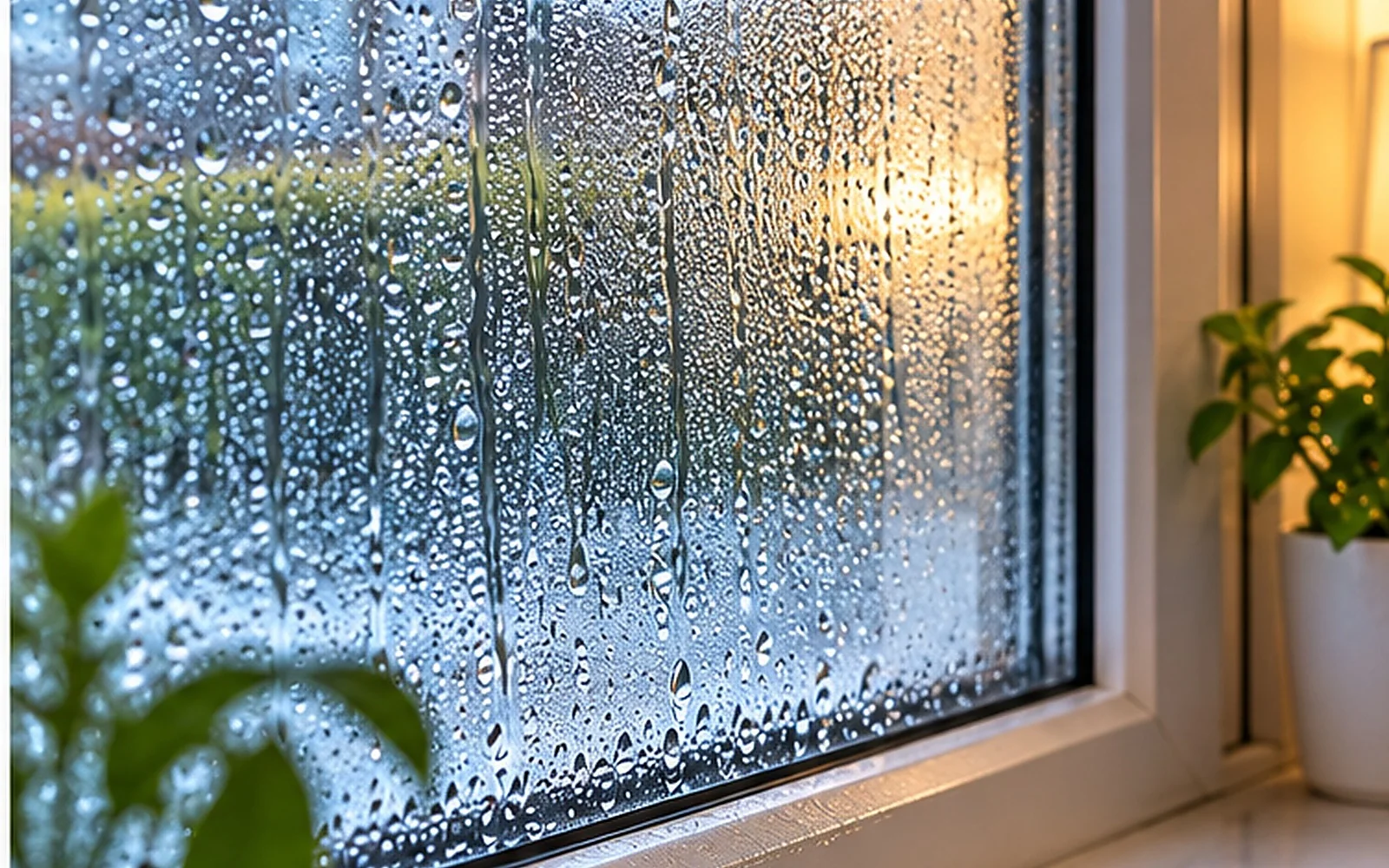
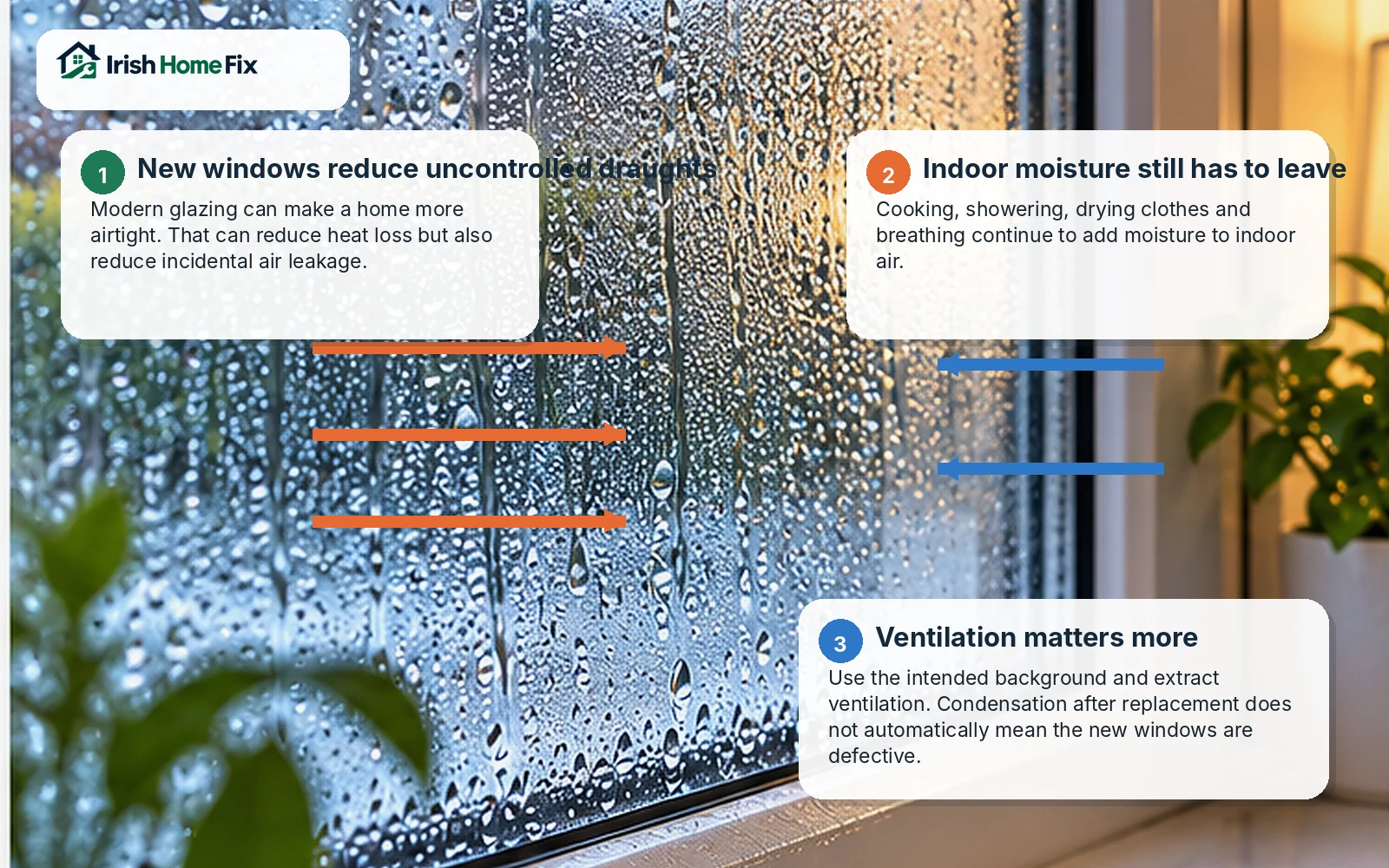
Condensation can become more noticeable after new windows because old uncontrolled draughts have been reduced. The windows may be better insulated, but the house can also retain more moisture if background and extract ventilation are not adequate.
What this usually means
If condensation increased soon after window replacement, check whether old vents were removed, covered or not replaced and whether wet-room extraction is working. Also note whether condensation is on the room side of the glass or between panes.
New windows can change the home’s ventilation balance
Older windows often allowed unintended air leakage around frames and seals. Replacement windows can greatly reduce that leakage, which is good for comfort and heat loss, but it also means the home must rely more consistently on purpose-provided ventilation.
If moisture production stays the same while incidental leakage falls, indoor humidity can rise. Better glazing may keep the glass warmer, so condensation can reduce on the pane yet appear on another cold bridge, reveal or external wall instead.
Likely causes
- Reduced uncontrolled air leakage after window replacement.
- Trickle vents omitted, closed or obstructed where they are part of the ventilation strategy.
- Existing extract fans no longer clearing moisture adequately.
- High indoor moisture from normal household activities.
- Local cold bridges around reveals even though the glazing has improved.
Safe checks to make first
- Check what ventilation provision was included with the new windows.
- Keep required vents open and clear.
- Confirm bathroom and kitchen extract fans operate and discharge outdoors.
- Measure humidity before and after normal household activities.
- Ask the installer or a ventilation professional about compliance if the home's ventilation strategy is unclear.
What to do today
- Check whether the replacement windows include trickle vents and whether they are open and unobstructed.
- Confirm bathroom and kitchen extraction is working effectively after the airtightness change.
- Monitor humidity and condensation patterns for several weeks rather than focusing only on the new glass.
What not to do
- Do not close new trickle vents permanently because the room feels draughty.
- Do not assume the installer caused a leak simply because condensation started after replacement; assess timing, surface location and ventilation first.
- Do not add more airtightness measures without considering the ventilation strategy for the whole home.
When to get someone qualified involved
- The installation appears to have removed or blocked required ventilation.
- Condensation is severe and persistent throughout the home.
- There is mould, damp damage or poor indoor air quality after the retrofit.
- You are unsure how the home's ventilation system is meant to work.
Irish-home context
SEAI warns that as homes become better insulated and more airtight, good ventilation becomes even more important. Its BER guidance also says required vents should not be permanently closed or covered.
Frequently asked questions
Why did condensation start after new windows?
The old windows may have leaked air unintentionally. New airtight frames can reduce that air change, so indoor moisture may build up unless background and extract ventilation are adequate.
Does condensation mean the new windows are defective?
Not necessarily. Condensation on the room side usually reflects indoor moisture and surface temperature. Moisture trapped between panes is different and can indicate a sealed-unit failure.
Should I keep trickle vents open in winter?
Purpose-provided background vents should generally be used as intended rather than permanently blocked. If draughts are excessive, the ventilation design should be assessed rather than simply sealed.
Guidance and references
- SEAI — Ventilation systems
- SEAI — Improve a BER rating (ventilation and condensation)
- gov.ie — Home ventilation
Irish Home Fix uses these references for general context. This guide is not a substitute for a site-specific building, electrical, plumbing or medical assessment.