
Condensation usually appears on cold surfaces and is linked to indoor humidity, while a leak or penetrating damp is often more localised and can track rain, plumbing use or a building defect. The pattern matters more than the label.
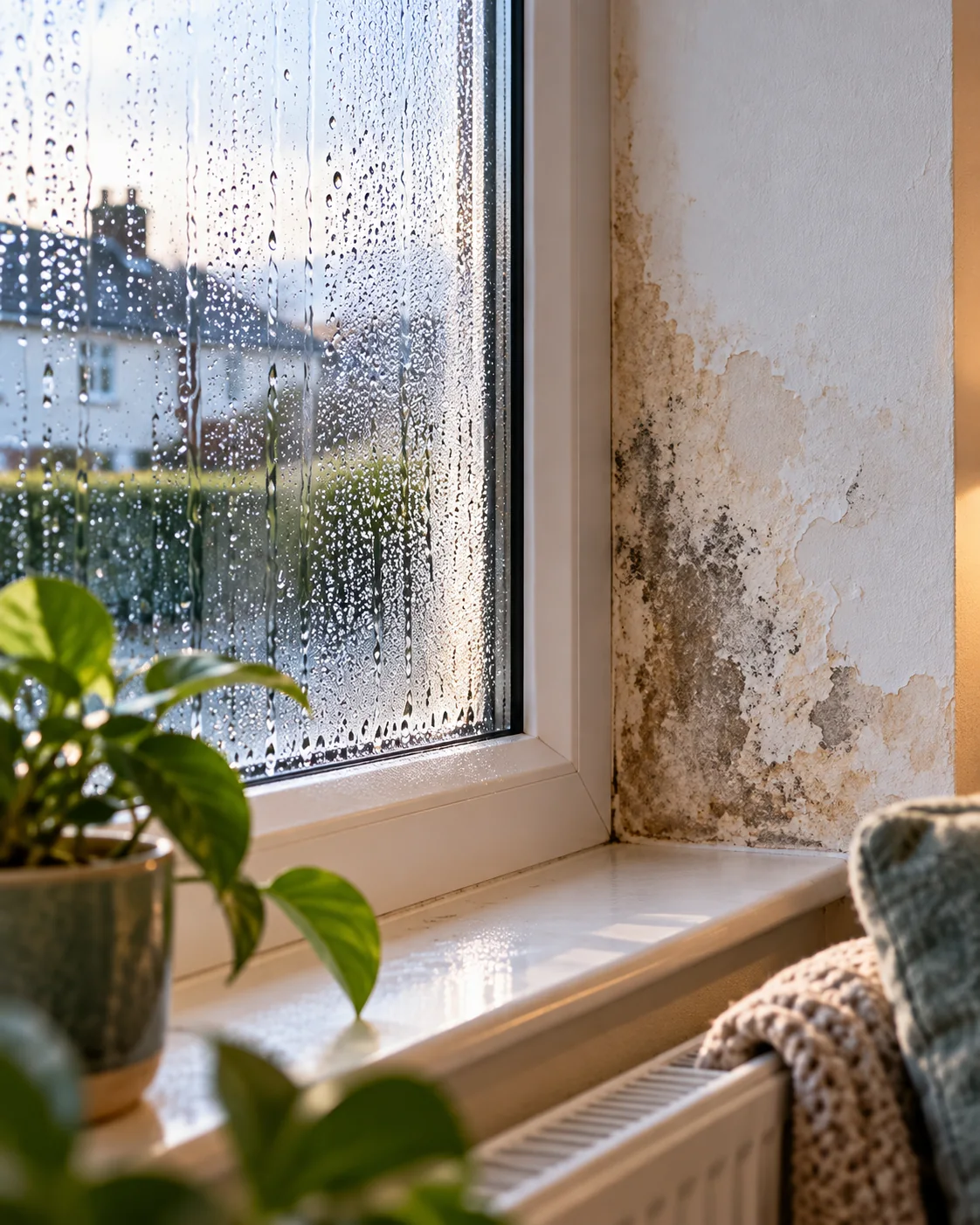
What this usually means
Take photos and notes for a week. Record weather, showers, cooking, heating and when the patch changes. A consistent pattern often tells you more than one moisture-meter reading.
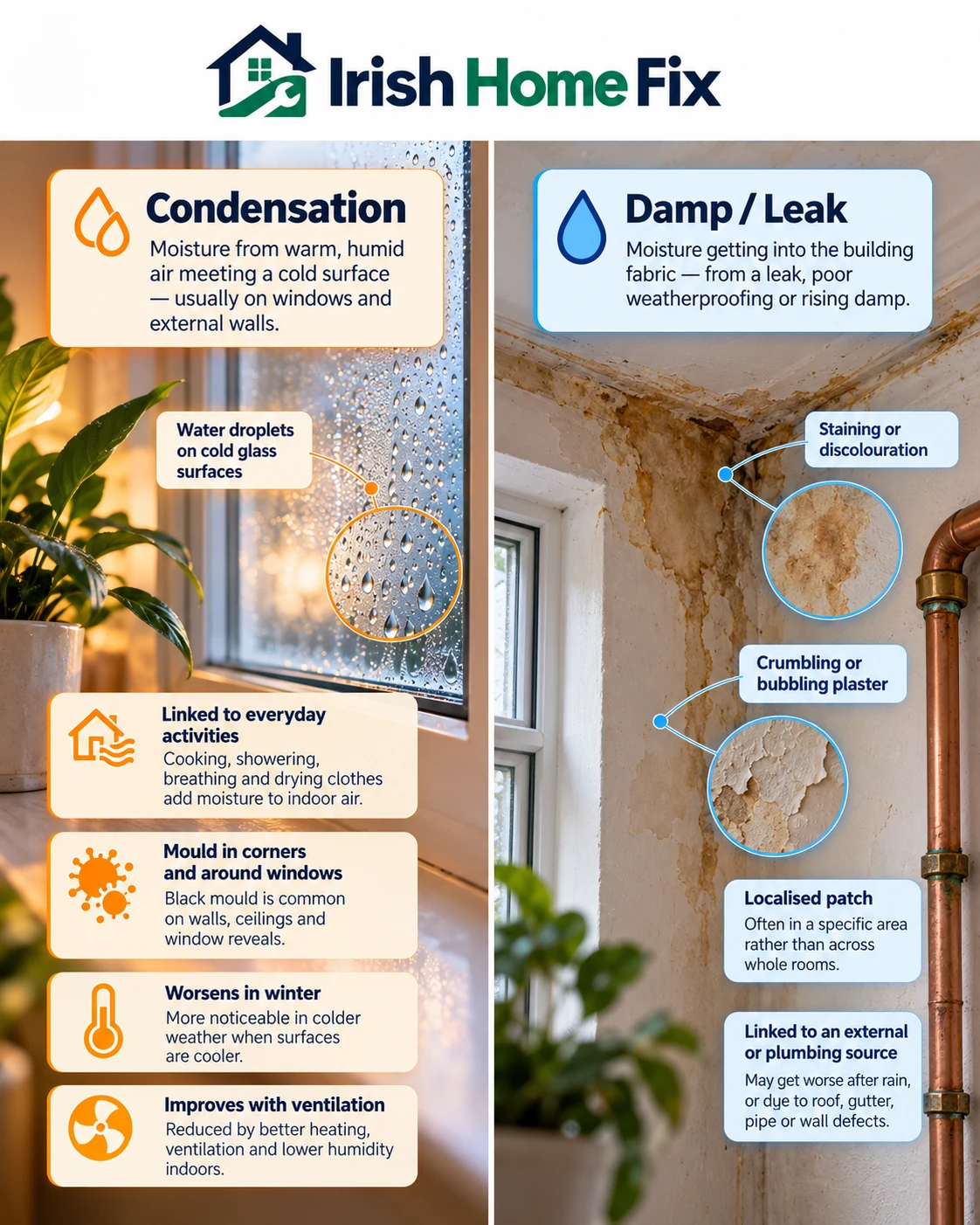
Timing and pattern are more useful than the colour of the stain
“Damp” describes a moisture condition, not one diagnosis. Condensation, rain penetration, plumbing leaks and moisture rising or bridging from lower parts of a building can all produce staining, peeling paint or mould. The visible result can look surprisingly similar.
Condensation tends to favour cold surfaces and periods of high indoor humidity. Water ingress often follows rain or appears near a defect. Plumbing leaks may relate to fixture use. Lower-wall moisture can have several causes and should not be labelled rising damp from appearance alone.
Likely causes
- Surface condensation on cold walls, windows and thermal bridges.
- Rainwater entering around roofs, gutters, windows or external walls.
- Plumbing or drainage leaks.
- Moisture trapped after a previous leak.
- Other building defects that need site-specific assessment.
Safe checks to make first
- Note whether the moisture is widespread on cold surfaces or concentrated in one patch.
- Check whether it worsens after rain.
- Check whether it changes after nearby plumbing use.
- Look for window condensation and high humidity elsewhere in the room.
- Inspect accessible gutters, downpipes and seals from a safe position.
- For rented homes, report persistent damp or ventilation defects to the landlord in writing.
What to do today
- Write down when the patch changes: after rain, after showers, overnight, after heating comes on, or after plumbing use.
- Check whether the surface is colder than surrounding areas and whether other cold surfaces in the room also show condensation.
- Photograph and date the area so you can see whether it spreads, dries or changes with weather.
What not to do
- Do not diagnose from a handheld moisture meter alone; different materials and salts can affect readings.
- Do not seal or decorate over an area that is still becoming wet.
- Do not commission an expensive damp treatment before the moisture source has been identified convincingly.
When to get someone qualified involved
- Moisture is structural, persistent or causing damage.
- The source cannot be identified with simple checks.
- There is significant mould growth.
- Roof, plumbing or external-wall work is likely to be required.
Irish-home context
Irish rented-housing standards require private landlords to keep properties free from damp-related defects and to provide adequate ventilation. For owner-occupied homes, SEAI guidance emphasises diagnosing moisture and maintaining effective ventilation.
Frequently asked questions
How can I tell condensation from penetrating damp?
Condensation often tracks cold surfaces and indoor humidity, while penetrating damp is more likely to correlate with rain and a building-envelope defect. The patterns can overlap, so persistent cases may need inspection.
Does damp at the bottom of a wall prove rising damp?
No. Plumbing, external ground levels, bridging, spills, condensation and other defects can affect lower walls. Rising damp is one possibility, not a visual certainty.
Can a hygrometer diagnose damp?
It can show whether room air is humid, which is useful for condensation, but it cannot prove or rule out water ingress inside the building fabric.
Guidance and references
- SEAI — Ventilation systems
- Citizens Information — Minimum standards for rented housing
- gov.ie — Home ventilation
- gov.ie — Minimum standards in rented accommodation
Irish Home Fix uses these references for general context. This guide is not a substitute for a site-specific building, electrical, plumbing or medical assessment.