
For a useful baseline, see normal indoor humidity in an Irish home before judging one reading in isolation.
A humid house is usually the result of moisture being produced faster than it is removed. Showers, cooking, laundry and occupants all add moisture; ventilation and extraction remove it. Leaks and persistently wet building materials can add another source.
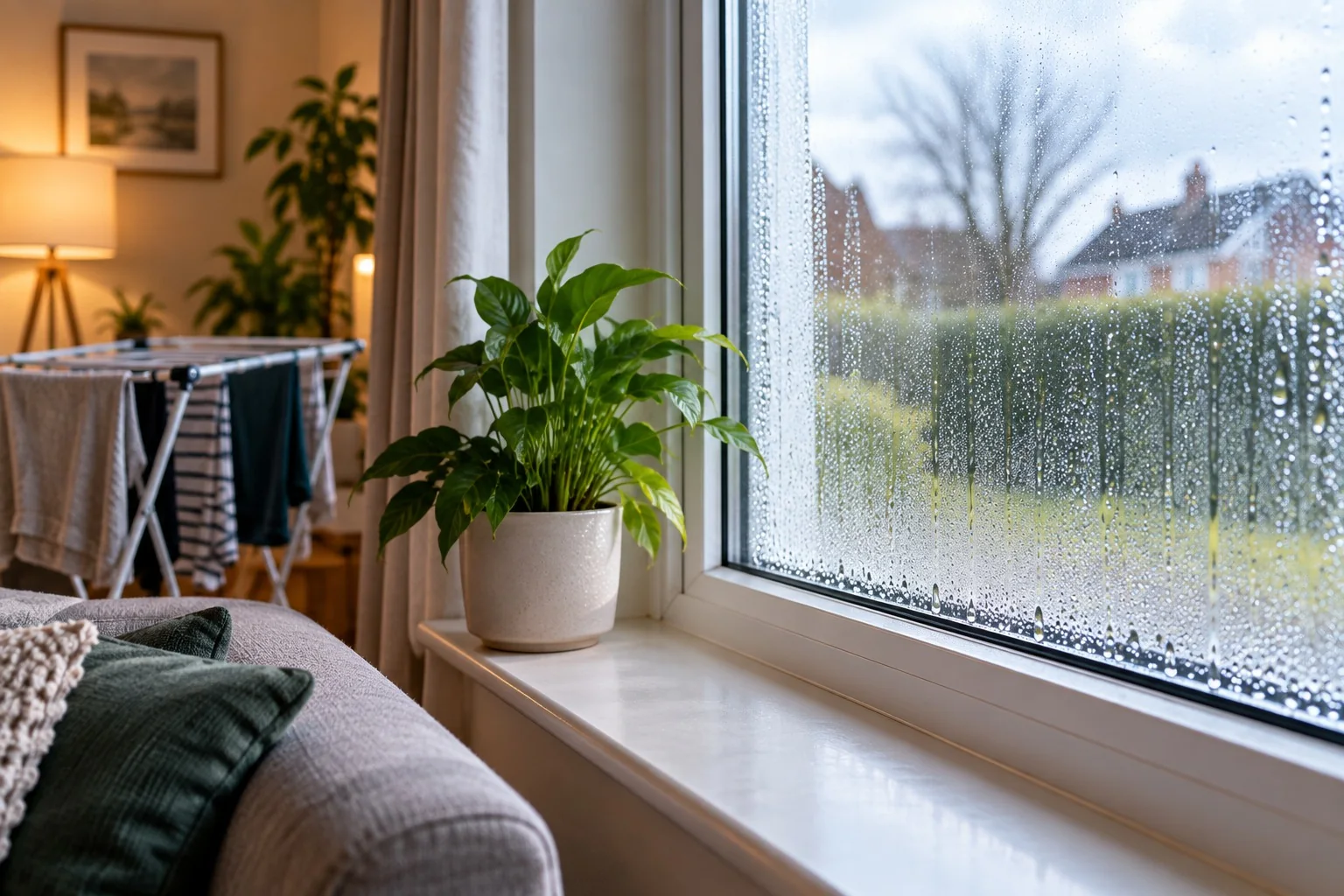
What this usually means
Do not judge humidity by feel alone. Use a basic digital hygrometer in several rooms and note readings before and after showers, cooking and laundry. A pattern over several days is more useful than one reading.
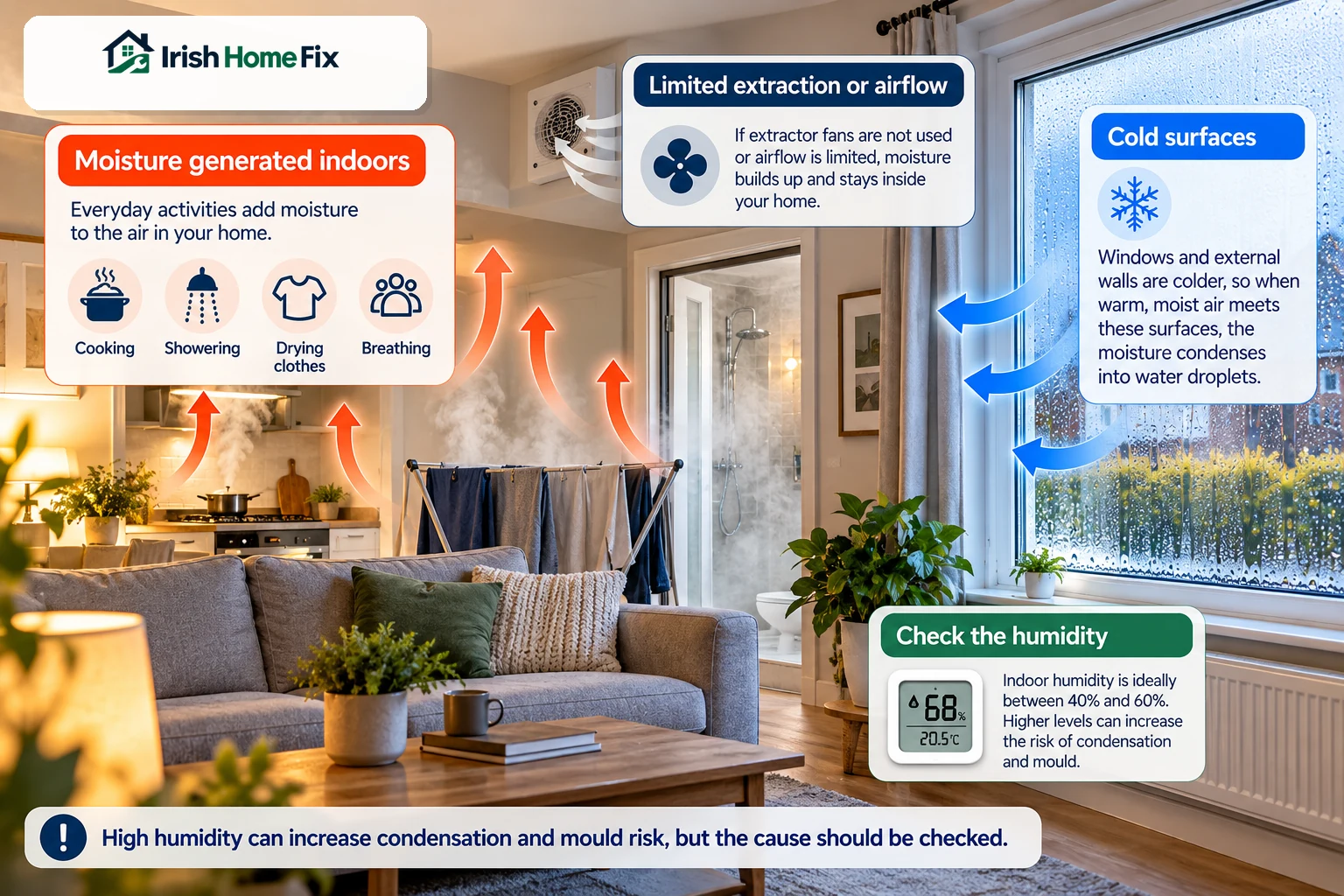
Think in terms of moisture in, moisture out and surface temperature
Indoor humidity rises when moisture is produced faster than it is removed. Showers, cooking, clothes drying, occupants and some appliances all add water vapour. Ventilation removes that moisture, while heating and insulation affect how likely it is to condense on cold surfaces.
A home can therefore feel humid for more than one reason at the same time. A very airtight home with weak extract ventilation behaves differently from an older draughty home with a plumbing leak, but both may show condensation or a musty smell.
Likely causes
- Frequent showering or cooking without effective extraction.
- Drying clothes indoors without enough ventilation or dehumidification.
- Blocked, closed or inadequate background vents.
- Extract fans that are weak, dirty, incorrectly ducted or not used long enough.
- Cold rooms that allow relative humidity to rise.
- Leaks or damp building materials.
Safe checks to make first
- Measure humidity in the main problem rooms at different times of day.
- Check that wet-room extract fans discharge to the outside and actually move air.
- Keep vents open and clean unless a qualified professional advises otherwise.
- Reduce avoidable moisture release, especially drying laundry in unventilated rooms.
- Look for local wet patches that may indicate a leak rather than general humidity.
What to do today
- List the main daily moisture sources in the home and check whether each wet room extracts effectively to outside.
- Measure humidity in more than one room and at different times of day to find patterns.
- Look for active leaks or rain-related damp before assuming the issue is only airborne humidity.
What not to do
- Do not chase a single “perfect” humidity reading while ignoring visible condensation or leaks.
- Do not block ventilation in an attempt to keep heat in.
- Do not run a dehumidifier continuously without checking why moisture is entering or being generated.
When to get someone qualified involved
- Humidity remains persistently high despite normal ventilation and moisture control.
- There are recurring mould patches or wet building materials.
- Ventilation equipment is not functioning or the duct route is uncertain.
- You are planning airtightness, insulation or window upgrades and ventilation has not been assessed.
Irish-home context
SEAI says good ventilation removes moisture and reduces the chance of condensation and mould. It also stresses that more airtight homes need appropriate ventilation to protect both the building and occupants.
Frequently asked questions
Why does humidity rise in winter?
Homes are more closed up, moisture-producing activities continue indoors and external surfaces are colder. That combination makes condensation more likely even if the amount of moisture produced has not changed dramatically.
Can heating lower relative humidity?
Warming air can reduce relative humidity for the same amount of moisture, and warmer surfaces reduce condensation risk. Heating does not remove the water vapour, so ventilation or dehumidification may still be needed.
Is high humidity always a ventilation problem?
No. Leaks, wet building materials and water ingress can also add moisture. Ventilation is important, but the source of abnormal moisture must be ruled out.
Guidance and references
- SEAI — Ventilation systems
- gov.ie — Home ventilation
- SEAI — Improve a BER rating (ventilation and condensation)
Irish Home Fix uses these references for general context. This guide is not a substitute for a site-specific building, electrical, plumbing or medical assessment.