
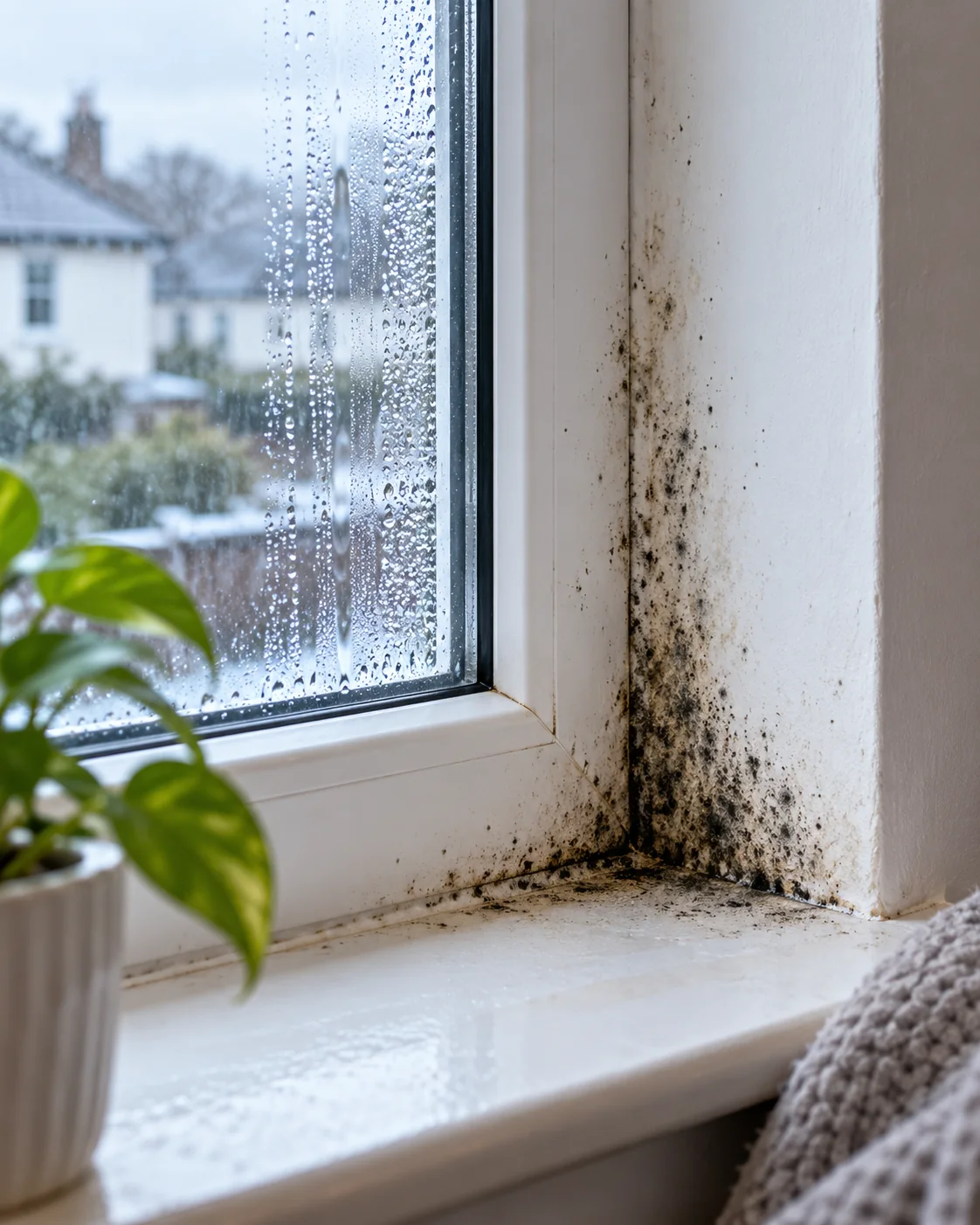
Black mould around a window is usually a moisture problem first and a cleaning problem second. Repeated condensation, cold reveals and weak ventilation can keep the surface damp enough for mould to return.
What this usually means
Look at the exact pattern. Mould concentrated on the silicone, frame corners or cold reveals often follows condensation. Staining that spreads from one point, worsens after rain or appears with damaged plaster may suggest water ingress instead.

Mould is a moisture clue, not just a stain
Visible mould around a window normally means the surface has been staying damp often enough for growth to recur. The most useful fix is therefore to reduce repeated wetting and understand why that location is colder or wetter than the surrounding room.
A thin line of growth on sealant can behave differently from mould spreading across plaster or timber. If finishes are soft, paint is lifting, timber is swelling, or the pattern tracks a particular joint after rain, investigate water ingress as well as indoor condensation.
Likely causes
- Repeated condensation on cold frames, glazing and reveals.
- High indoor humidity combined with limited ventilation.
- Cold bridging around the window opening.
- Poor air movement behind curtains or blinds.
- Less commonly, defective external seals, flashing or other rainwater entry.
Safe checks to make first
- Dry the area and monitor whether new moisture appears after normal household activities or after rain.
- Check ventilation openings and bathroom or kitchen extract fans.
- Use a hygrometer to see whether the room stays humid for long periods.
- Inspect the exterior window perimeter from a safe position for obvious seal or render defects.
- Do not simply paint over recurring mould without dealing with the cause of moisture.
What to do today
- Photograph the pattern before cleaning so you can see whether it returns in the same place.
- Deal with standing condensation promptly and improve moisture extraction at showers, cooking and laundry sources.
- Check behind blinds and curtains and allow air to reach the frame and reveal.
What not to do
- Do not paint directly over active mould or damp material.
- Do not mix cleaning chemicals or use products in a way that conflicts with their instructions.
- Do not ignore recurring growth that spreads beyond a small surface area or is associated with building damage.
When to get someone qualified involved
- Mould covers a large area or returns quickly after the moisture source is addressed.
- Anyone in the home has significant respiratory symptoms or sensitivity to mould.
- Plaster, timber or window boards are soft, swollen or deteriorating.
- You suspect water is entering from outside.
Irish-home context
HSE guidance recommends keeping the home dry and well ventilated and dealing with damp and condensation. SEAI also links persistent condensation and mould with inadequate ventilation and advises maintaining required ventilation openings.
Frequently asked questions
Is black mould around a window always caused by condensation?
No. Condensation is common, but defective seals, render, flashing, gutters or other water-entry paths can create a similar-looking problem. Timing and pattern help distinguish them.
Can I just replace the silicone?
New sealant may improve appearance, but mould will return if the surface continues to stay wet. Find and control the moisture source first.
When should mould around a window be professionally assessed?
Get help when the affected area is extensive, the substrate is damaged, water ingress is suspected, the growth returns quickly, or a household member has significant health concerns.
Guidance and references
- HSE — Managing asthma: indoor air quality, mould and damp
- SEAI — Ventilation systems
- SEAI — Improve a BER rating (ventilation and condensation)
Irish Home Fix uses these references for general context. This guide is not a substitute for a site-specific building, electrical, plumbing or medical assessment.