
A small hygrometer can help separate a short shower-related spike from a persistent issue; see how to check your indoor humidity level.
Steam after a shower is normal; water remaining on walls, ceilings and windows for long periods is not ideal. The first checks are whether the extractor actually moves air, whether it vents outdoors and whether replacement air can enter the room.
What this usually means
Watch how long mirrors and windows stay wet after a shower. If condensation remains for a long time or mould grows on the ceiling, corners or sealant, moisture is not being cleared quickly enough.
Control the moisture at the moment it is produced
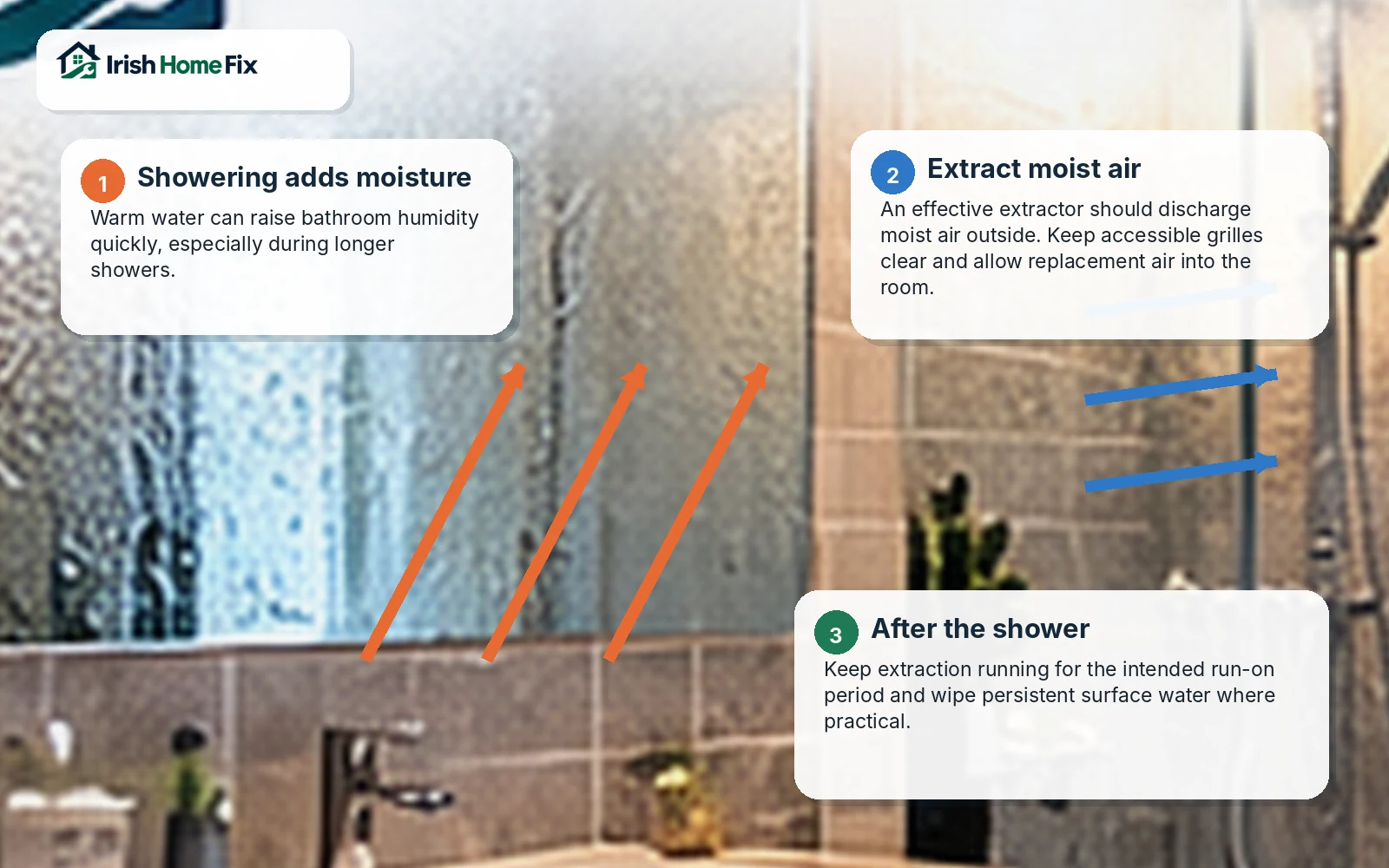
A shower can release a large burst of water vapour in a short time. The most effective strategy is to extract that moisture from the bathroom before it spreads through the rest of the home and condenses on colder surfaces.
Some steam on mirrors or tiles immediately after a shower is not unusual. Concern increases when the room stays wet for a long time, ceilings or walls develop mould, paint peels, or moisture repeatedly spreads into adjacent rooms.
Likely causes
- Extractor fan not running, blocked or undersized.
- Fan ducting that is long, crushed or poorly routed.
- Fan discharging into an attic instead of outdoors.
- No adequate air path into the bathroom while the fan is running.
- Very cold surfaces or heavy moisture loads.
Safe checks to make first
- Confirm the fan operates whenever it is meant to.
- Clean accessible grilles according to the manufacturer's instructions.
- Check from a safe external position that the discharge outlet is not blocked.
- Keep the bathroom door closed while showering so steam does not spread, while still allowing the designed air path to the fan.
- Allow the fan to continue running after the shower if it has a run-on function.
What to do today
- Switch on the extractor before or at the start of the shower and let any designed overrun continue afterward.
- Keep the bathroom door closed during the shower so moisture is removed at source rather than sent through the home.
- Check that the fan and grille are clean and that the air is actually being discharged outdoors.
What not to do
- Do not vent a bathroom fan into an attic or roof void.
- Do not permanently close background ventilation to reduce draughts.
- Do not keep repainting a mouldy ceiling without checking fan performance, ducting and moisture load.
When to get someone qualified involved
- The fan does not work or electrical work would be required.
- Ducting is hidden and you cannot confirm where it terminates.
- Ceiling or wall materials are wet, damaged or mould keeps returning.
Irish-home context
SEAI advises that wet rooms such as bathrooms and kitchens should have mechanical extract ventilation to remove water vapour rapidly. Irish building guidance also treats ventilation as a key part of healthy homes.
Frequently asked questions
How long should a bathroom stay steamy after a shower?
There is no one time for every room, but steam and wet surfaces should clear reasonably promptly when extraction is effective. Persistent dampness for long periods suggests the ventilation should be checked.
Should I leave the bathroom door open after a shower?
First remove moisture at source with the bathroom extraction system. Spreading humid air into colder rooms can move the condensation problem rather than solve it.
Is an open window enough?
Purge ventilation can help, but reliable mechanical extraction is useful because it removes moisture directly from the wet room and does not depend on wind or occupants remembering to open a window.
Guidance and references
Irish Home Fix uses these references for general context. This guide is not a substitute for a site-specific building, electrical, plumbing or medical assessment.