
If you are monitoring moisture while clothes dry indoors, check what humidity your home should be and compare readings under similar conditions.
Drying clothes indoors adds moisture to the air. If that moisture is not removed, it can condense on cold windows and walls. The practical goal is to keep the laundry in one ventilated space and remove moisture there rather than letting it spread through the home.
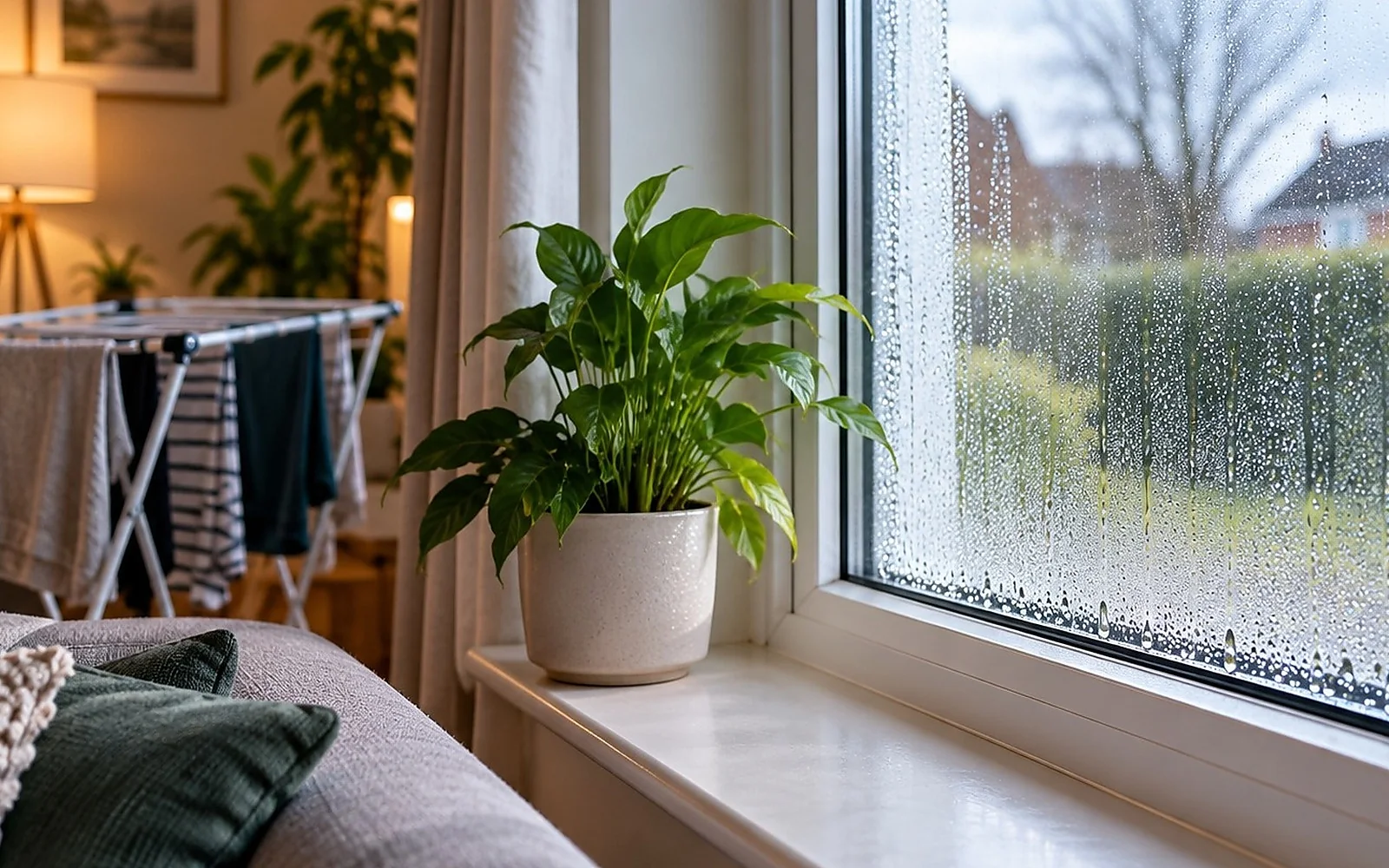
What this usually means
If windows mist up or a room feels clammy during and after clothes drying, the moisture load is exceeding the room's ability to remove it.
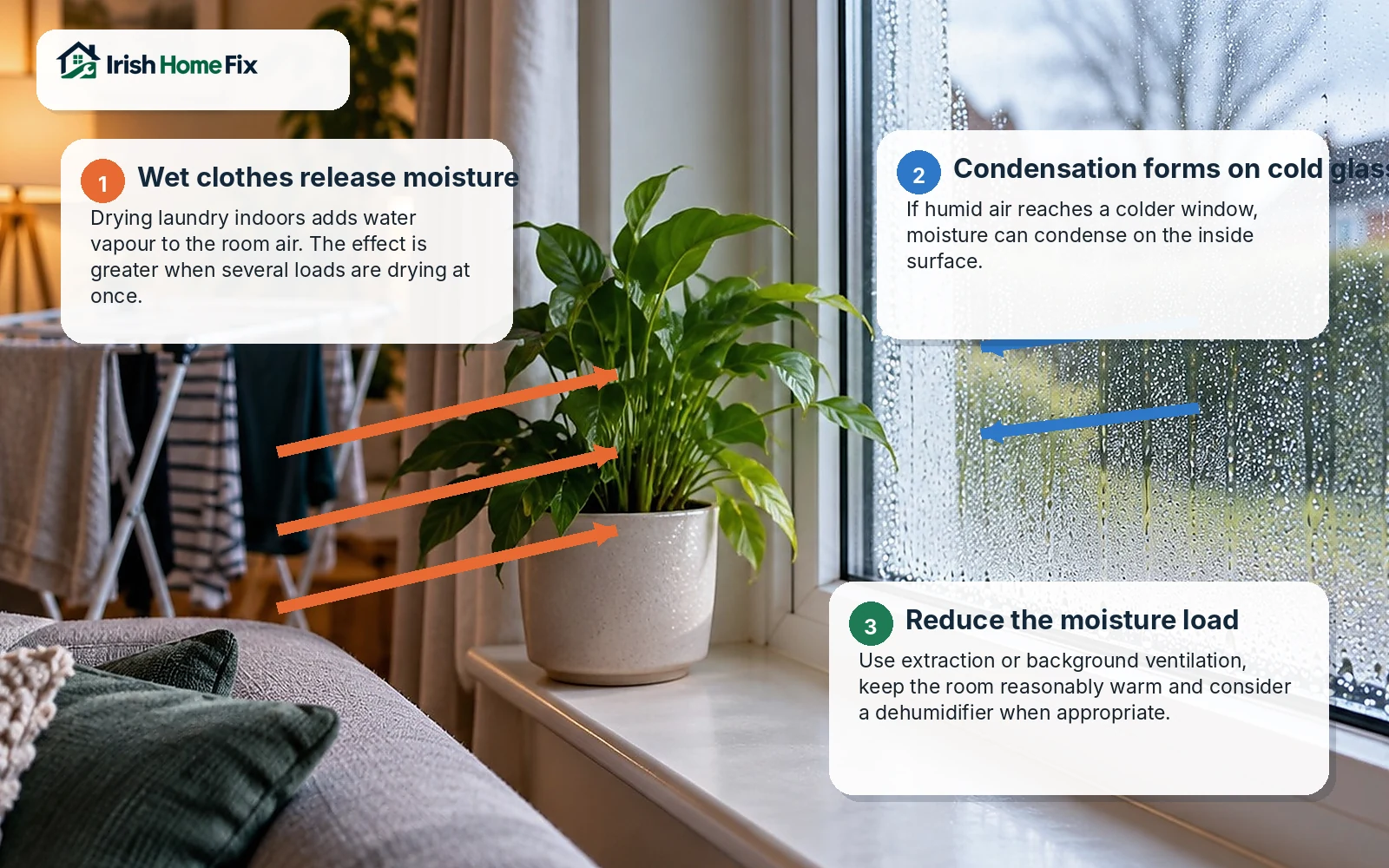
Laundry moves water from the fabric into your indoor air
When wet washing dries indoors, the water that was in the fabric does not disappear; it evaporates into the room. If that moisture is not extracted or removed, relative humidity rises and the water may later condense on colder windows, external walls or attic surfaces.
The aim is to contain and remove the moisture efficiently. A well-ventilated utility space, a correctly vented or condensing dryer, effective mechanical extraction, or a dehumidifier used in a closed drying room can all be more controlled than spreading laundry through the whole home.
Likely causes
- Air-drying a full load of wet laundry indoors.
- Drying clothes near radiators, which can speed evaporation into the room air.
- Closed windows and vents with no effective extraction.
- Drying laundry in bedrooms or living rooms with cold external surfaces.
Safe checks to make first
- Use an outdoor line or suitable dryer when practical.
- If drying indoors, keep it in one room with appropriate ventilation rather than throughout the home.
- Close the room door so moisture does not spread to colder rooms.
- Use extraction or a dehumidifier where appropriate and safe.
- Monitor window condensation and humidity to see whether the strategy is working.
What to do today
- Spin laundry at the highest suitable washing-machine speed before indoor drying so less water enters the room.
- Dry clothes in one suitable room rather than dispersing racks around bedrooms and living spaces.
- Use effective extraction or a dehumidifier in that room and keep the rest of the home from receiving the moisture load.
What not to do
- Do not drape wet clothes over radiators; it can add moisture quickly and restrict useful heat output.
- Do not dry large loads in a bedroom with no effective ventilation.
- Do not close or block required background vents while drying clothes.
When to get someone qualified involved
- Condensation remains severe even when indoor laundry is reduced.
- Mould or damp damage is established on walls or ceilings.
- The room has no practical ventilation route.
Irish-home context
HSE guidance specifically advises avoiding drying clothes indoors where possible and recommends keeping homes dry and well ventilated. In rented accommodation, minimum standards also include ventilation requirements and, in many cases, access to drying facilities.
Frequently asked questions
Does drying clothes indoors really cause condensation?
It can. The water in the laundry evaporates into the indoor air. If ventilation or dehumidification cannot remove it quickly enough, condensation becomes more likely on cold surfaces.
Is a dehumidifier good for drying clothes?
It can be effective in a closed drying room because it removes moisture from the air. Running cost and drying time depend on the machine, room temperature and laundry load.
Should I open a window while using a dehumidifier?
Usually a dehumidifier works more efficiently in a reasonably closed space, while the home still needs its designed background ventilation. Follow the appliance instructions and do not block required vents.
Guidance and references
- HSE — Managing asthma: indoor air quality, mould and damp
- Citizens Information — Minimum standards for rented housing
Irish Home Fix uses these references for general context. This guide is not a substitute for a site-specific building, electrical, plumbing or medical assessment.