
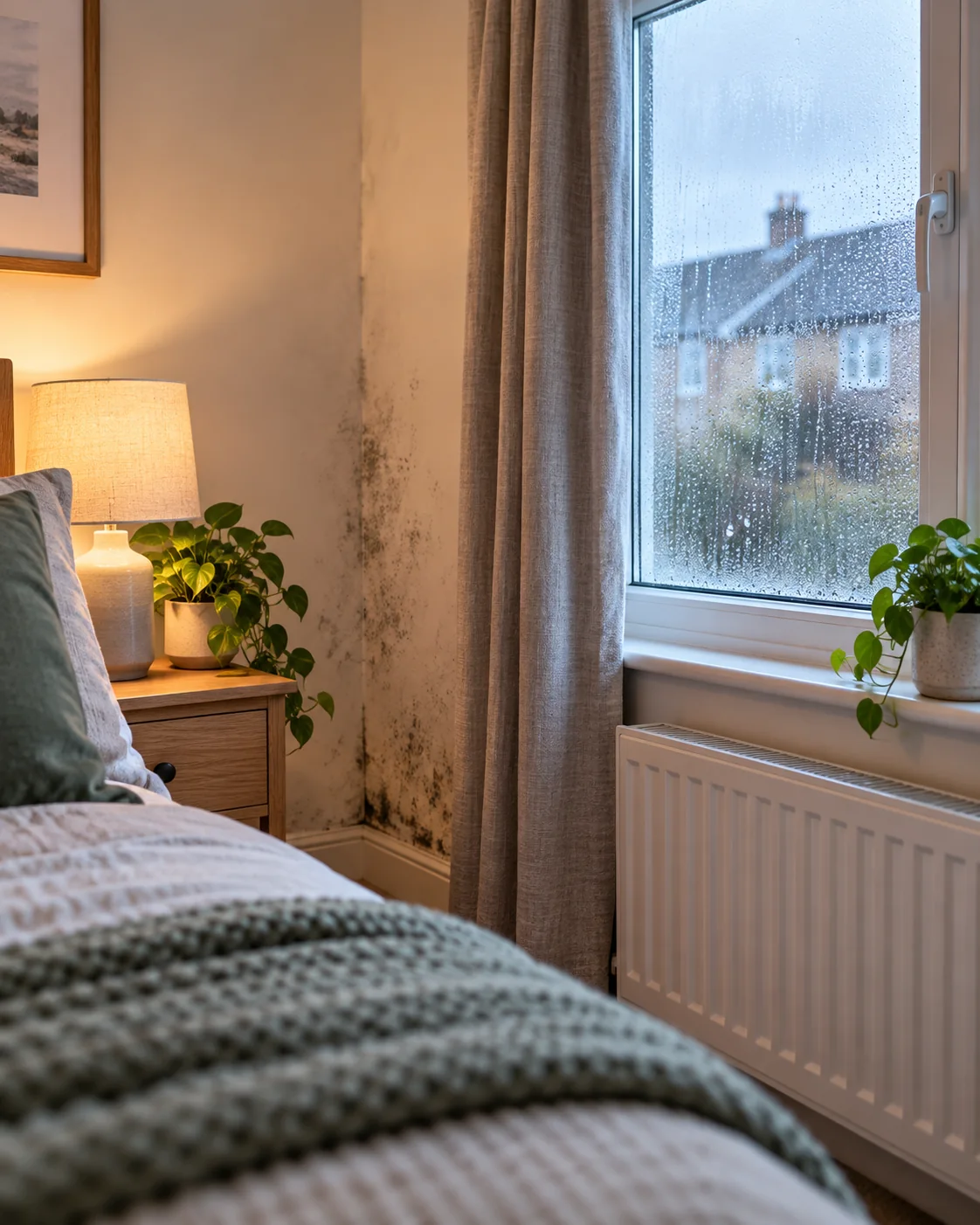
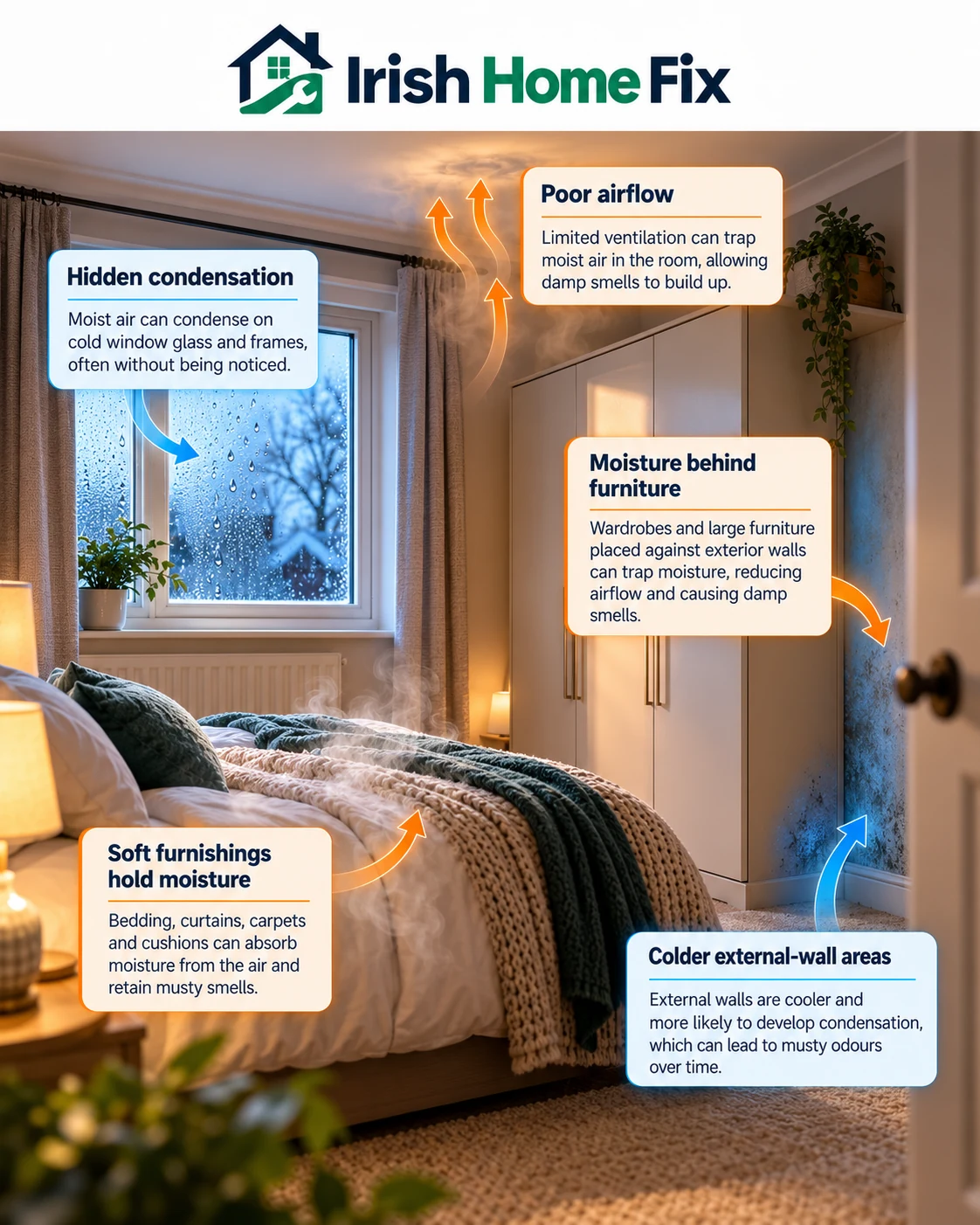
A persistent damp or musty smell usually means moisture is present somewhere, even if you cannot see it immediately. Common hidden locations include behind furniture, inside wardrobes, under window boards, at skirting level and around cold external-wall corners.
What this usually means
Notice whether the smell is strongest after the room has been closed, after rain, or when heating first comes on. A smell that is worse behind a wardrobe may point to poor air circulation and surface mould. A smell that worsens after wet weather can suggest a building leak.
A smell can reveal hidden moisture before a stain appears
A musty or earthy smell is useful information even when the walls look clean. Odour can come from hidden mould, a damp carpet or underlay, the back of furniture, a wardrobe, a cold external wall, a leak, or moisture in a floor or ceiling void.
The best first step is to narrow the location. Note whether the smell is strongest after rain, after the room has been closed overnight, near a window, beside an ensuite, at floor level or inside a cupboard. That pattern often tells you more than spraying a fragrance over the room.
Likely causes
- Hidden mould behind furniture or inside a poorly ventilated wardrobe.
- Condensation on a cold external wall.
- Roof, gutter, window or plumbing leaks.
- Damp floor or skirting materials.
- Stored textiles or belongings that have absorbed moisture.
Safe checks to make first
- Pull movable furniture away from external walls and inspect behind it.
- Check skirting boards, window reveals and corners for staining or mould.
- Measure humidity over several days rather than relying on a single reading.
- Check whether the smell changes after rain, showers or heating cycles.
- Dry or remove damp stored items and improve air movement while investigating the cause.
What to do today
- Air the room and then close it for a normal period so you can identify where the smell returns first.
- Inspect behind furniture, under removable rugs, inside wardrobes and around skirting boards without disturbing suspect building materials.
- Check for plumbing fixtures, roof areas or external walls adjacent to the strongest-smelling location.
What not to do
- Do not use air freshener as a substitute for diagnosis.
- Do not pull apart ceilings, wall linings or suspect insulation without understanding the hazard and construction.
- Do not assume a room is dry just because no surface stain is visible.
When to get someone qualified involved
- There is visible structural damage or persistent wetness.
- You suspect a hidden plumbing, roof or external-wall leak.
- The smell continues despite drying, ventilation and removal of damp contents.
- Large areas of mould are discovered.
Irish-home context
HSE guidance notes that mould spores can be a problem in damp homes and recommends dealing with damp and condensation rather than only treating the visible result.
Frequently asked questions
Can a damp smell exist without visible mould?
Yes. Moisture or mould may be hidden behind furniture, within finishes, under flooring or in an adjacent void. Odour is a reason to investigate the moisture source, not proof of one specific defect.
Why is the smell stronger in the morning?
A closed, cooler room can have less air exchange overnight. Humidity can rise and odours become more noticeable before the room is ventilated and warmed.
Will a dehumidifier remove a musty smell?
It may reduce humidity and make the room feel drier, but it will not repair a leak or remove contaminated material. The cause still needs to be identified.
Guidance and references
- HSE — Managing asthma: indoor air quality, mould and damp
- SEAI — Ventilation systems
- gov.ie — Minimum standards in rented accommodation
Irish Home Fix uses these references for general context. This guide is not a substitute for a site-specific building, electrical, plumbing or medical assessment.