
Mould on a bedroom wall is often linked to condensation where a cold wall meets humid indoor air, especially behind furniture or in corners. But a localised damp patch, rain-related staining or damaged plaster can point to a leak or penetrating damp.
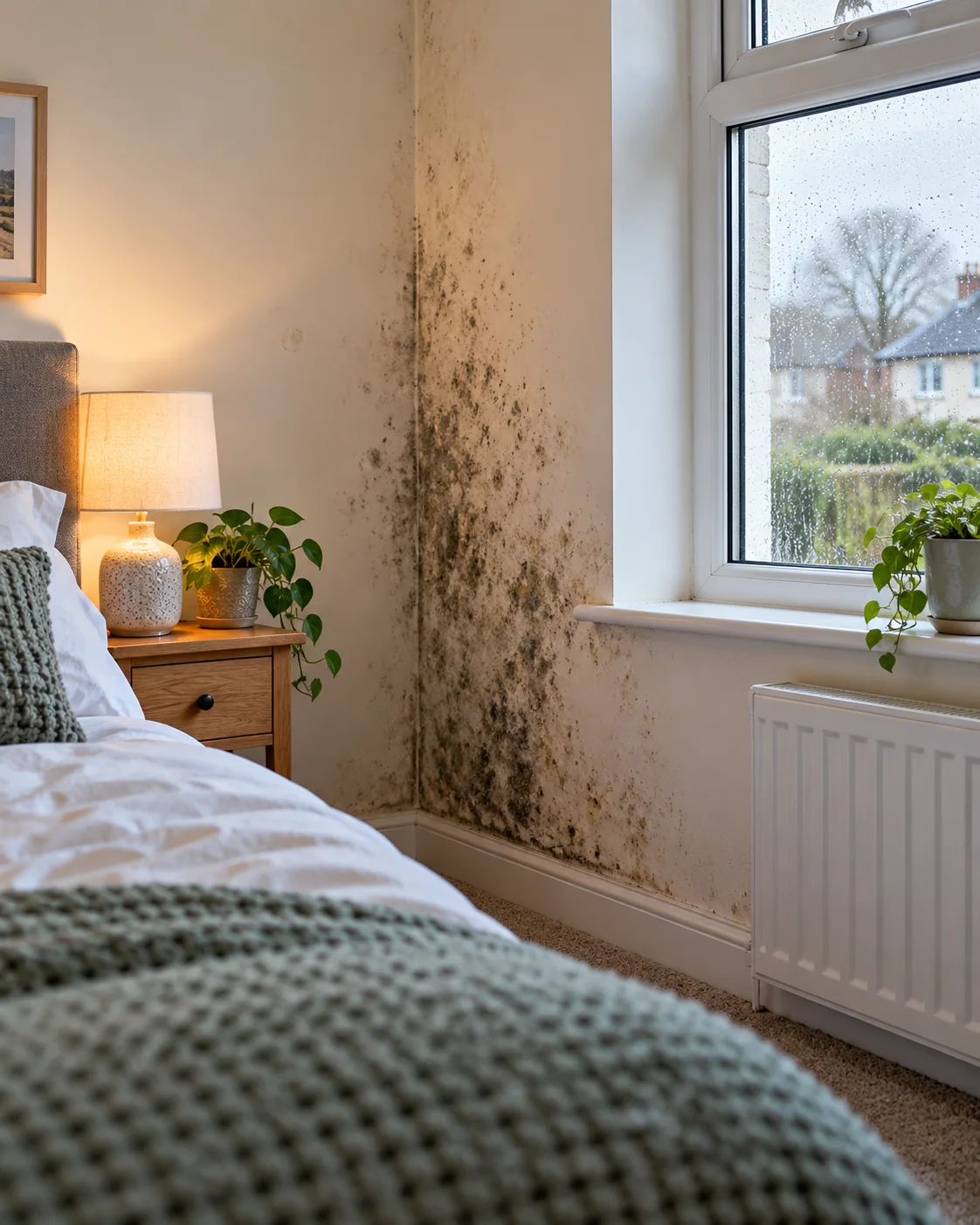
What this usually means
Map the pattern before treating it. Condensation-related mould is commonly found in corners, behind wardrobes and on cold external walls. A patch with a defined edge, tide mark or strong link to wet weather deserves a building-fabric check.
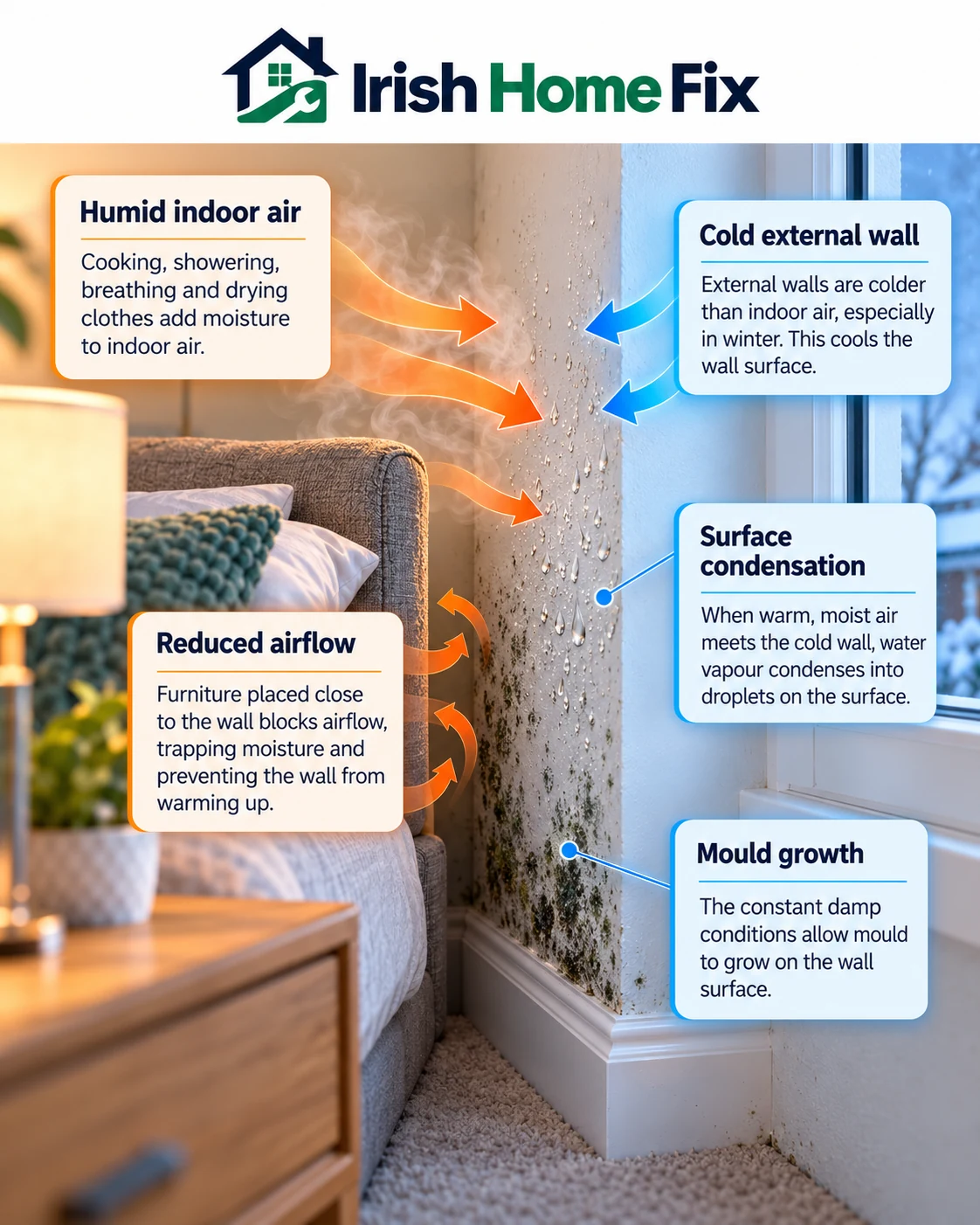
Wall mould can have several different moisture sources
Mould on an external bedroom wall often appears where the surface is colder: behind a wardrobe, in a corner, around a lintel or near a window reveal. That pattern can fit surface condensation, but not every dark patch is caused by humidity alone.
Rain penetration, plumbing leaks and defects above the room can also wet a wall. A useful clue is whether the patch follows weather or plumbing use, whether the material itself feels damp, and whether the mould is confined to cold surface zones or spreads from a specific point.
Likely causes
- Cold external wall surfaces and thermal bridges.
- Furniture positioned tightly against an outside wall, restricting air movement.
- High bedroom humidity overnight.
- Inadequate background ventilation.
- Roof, gutter, plumbing or external-wall defects causing moisture ingress.
Safe checks to make first
- Move furniture a short distance away from the affected wall and inspect the full area.
- Measure room humidity and compare it with other rooms.
- Check whether the patch changes after rainfall or after use of nearby plumbing.
- Inspect accessible gutters, downpipes and external finishes from ground level.
- Confirm that existing room vents are open and not covered.
What to do today
- Move movable furniture far enough from the wall to inspect the full pattern and allow air movement.
- Check the wall after dry weather and again after prolonged rain to see whether the pattern changes.
- Measure room humidity and temperature while also checking ventilation and heating rather than focusing on one factor alone.
What not to do
- Do not diagnose “rising damp” from appearance alone. Several defects can imitate each other.
- Do not cover the wall with impermeable finishes while it is still damp.
- Do not rely on a dehumidifier if there is an active leak or building defect.
When to get someone qualified involved
- The wall remains wet even when indoor humidity is controlled.
- The patch grows after rain or is close to a plumbing route.
- Plaster is crumbling, salts are appearing or timber is affected.
- Mould is extensive or the source cannot be identified.
Irish-home context
SEAI technical guidance notes that corners and other thermal bridges can be vulnerable to surface condensation and that poor air circulation, such as wardrobes against exposed external walls, can increase risk.
Frequently asked questions
Why is mould often in bedroom corners?
Corners and junctions can have lower surface temperatures and less air movement, especially behind furniture. If room humidity is high, those surfaces can remain damp long enough for mould to grow.
Does mould on an external wall mean the wall is leaking?
Not always. Surface condensation can produce the same symptom. Rain-related timing, staining, damaged finishes and moisture within the wall are clues that a leak or penetration needs investigation.
Should I insulate the wall immediately?
Insulation can improve surface temperatures when designed correctly, but adding insulation without understanding moisture and ventilation can create new risks. Diagnose first, then choose a suitable retrofit approach.
Guidance and references
- SEAI — S.R.54 retrofit guidance (surface condensation and humidity)
- SEAI — Ventilation systems
- HSE — Managing asthma: indoor air quality, mould and damp
- gov.ie — Minimum standards in rented accommodation
Irish Home Fix uses these references for general context. This guide is not a substitute for a site-specific building, electrical, plumbing or medical assessment.