
Furniture placed tightly against a cold external wall can create a pocket of still, cool air where surface humidity rises and mould develops. Moving the furniture slightly away can improve airflow, but the underlying room humidity and wall temperature still matter.
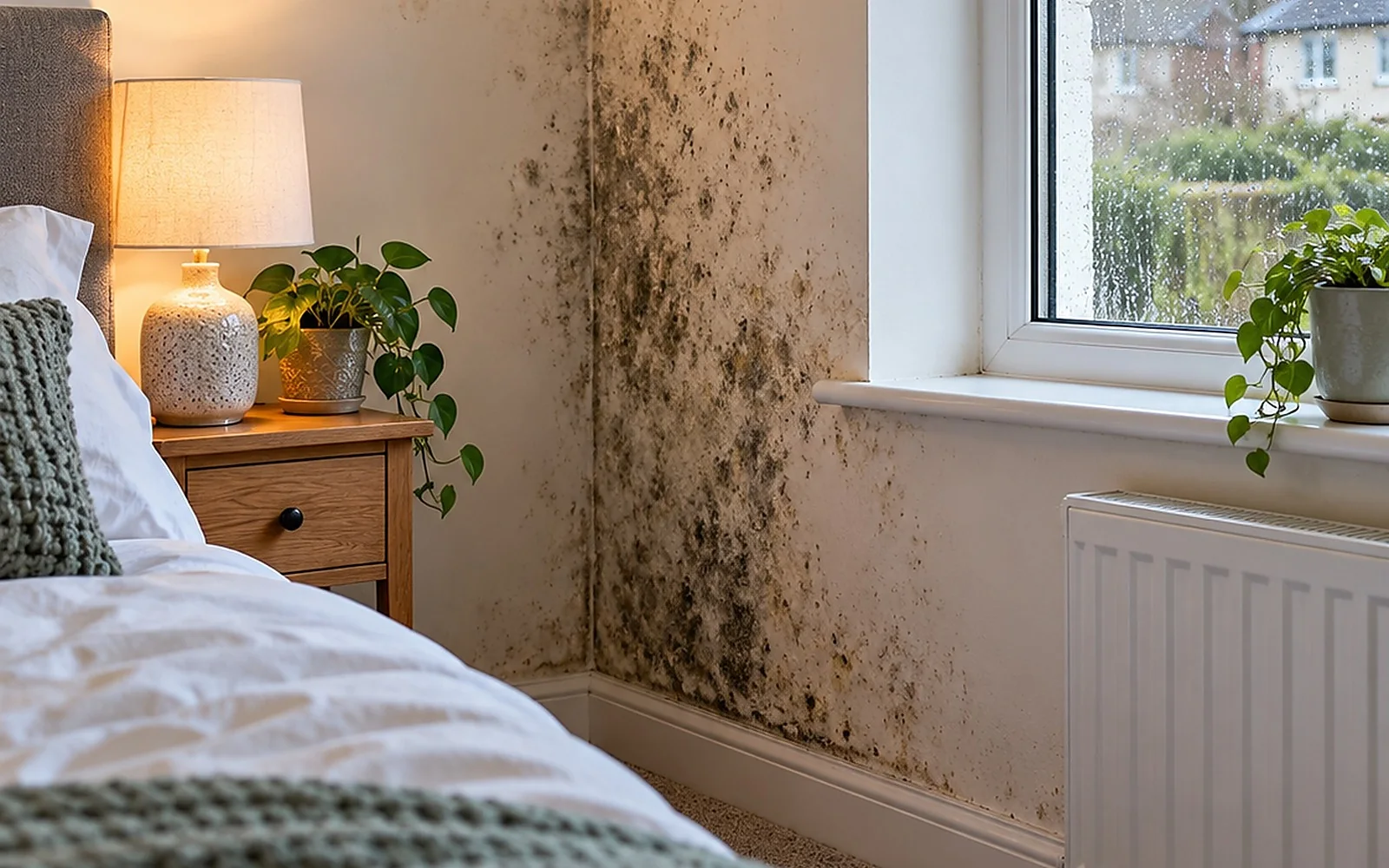
What this usually means
The classic pattern is mould concentrated behind a wardrobe, headboard or large item on an outside wall while the open parts of the room look normal.
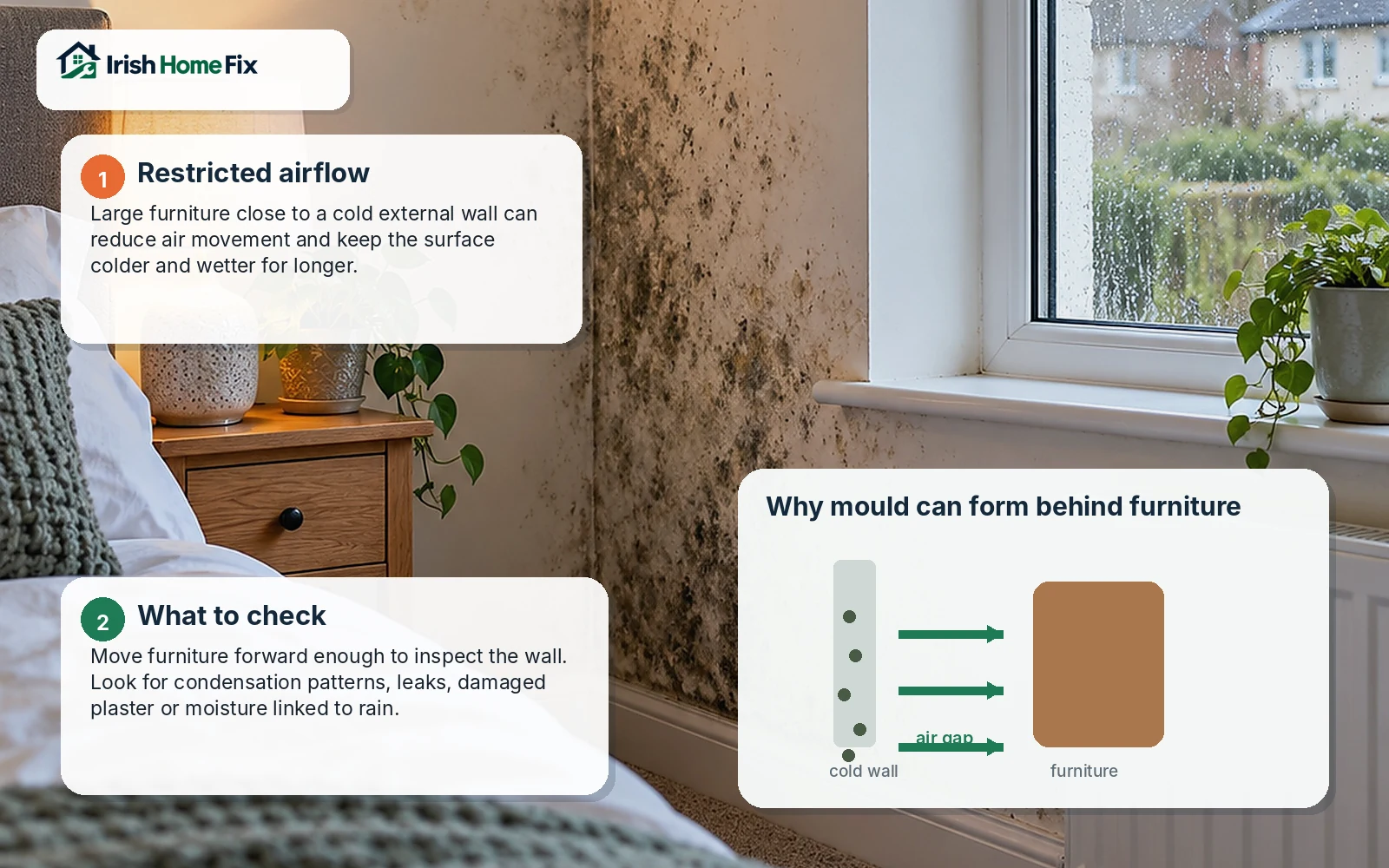
Cold wall + trapped air is a common combination
Furniture close to an external wall can create a small pocket of cooler, less-moving air. The wall surface behind it may stay colder than the room, while moisture from normal occupation reaches the surface and dries slowly. That is why mould can be hidden for months behind a wardrobe even when the visible room looks fine.
The pattern is especially important. A broad patch matching the furniture footprint often suggests restricted airflow and surface condensation; a localised wet area that tracks rain, plumbing or a roof defect needs a different diagnosis.
Likely causes
- Poor air circulation behind large furniture.
- A cold external wall or thermal bridge.
- High bedroom humidity.
- Furniture packed tightly with damp clothing or textiles.
- A hidden leak behind or above the furniture.
Safe checks to make first
- Move the item away from the wall and inspect the entire surface.
- Check the skirting and floor for signs of active water.
- Measure room humidity and compare with other rooms.
- Leave a reasonable air gap behind large furniture on cold external walls.
- Check the area again after several weeks to see whether mould returns.
What to do today
- Move movable furniture away from the wall far enough to inspect and dry the area.
- Check the back of the furniture, skirting and flooring for damage as well as the wall itself.
- Improve room ventilation and keep some air gap around large items on cold external walls where practical.
What not to do
- Do not push furniture back tightly against a still-damp wall.
- Do not assume every hidden patch is “just condensation” without checking for leaks.
- Do not disturb large areas of mould-contaminated porous material without appropriate advice.
When to get someone qualified involved
- The wall is physically wet or damaged.
- Mould is extensive, recurring or affects vulnerable occupants.
- You suspect roof, plumbing or external-wall water entry.
Irish-home context
SEAI retrofit guidance specifically notes that poor air circulation, including wardrobes against exposed and poorly insulated external walls, can increase surface-condensation risk.
Frequently asked questions
How much gap should I leave behind furniture?
There is no single required gap for every home. The practical goal is enough clearance for air movement and inspection, especially on cold external walls.
Why is there mould behind a wardrobe but nowhere else?
The area behind the wardrobe may be colder and receive less air circulation, creating a local surface condition favourable to condensation and mould.
Will moving the furniture solve it permanently?
It can help if restricted airflow is the main cause, but high room humidity, a cold bridge or water ingress may still need attention.
Guidance and references
- SEAI — S.R.54 retrofit guidance (surface condensation and humidity)
- HSE — Managing asthma: indoor air quality, mould and damp
Irish Home Fix uses these references for general context. This guide is not a substitute for a site-specific building, electrical, plumbing or medical assessment.