
How much does a dehumidifier cost to run in Ireland? A 300 W unit drawing 0.30 kW for eight full-power hours uses about 2.4 kWh. Multiply that by your electricity unit rate. A humidistat-controlled unit may cycle once the target humidity is reached, so measured kWh is usually more realistic than assuming full power all day.
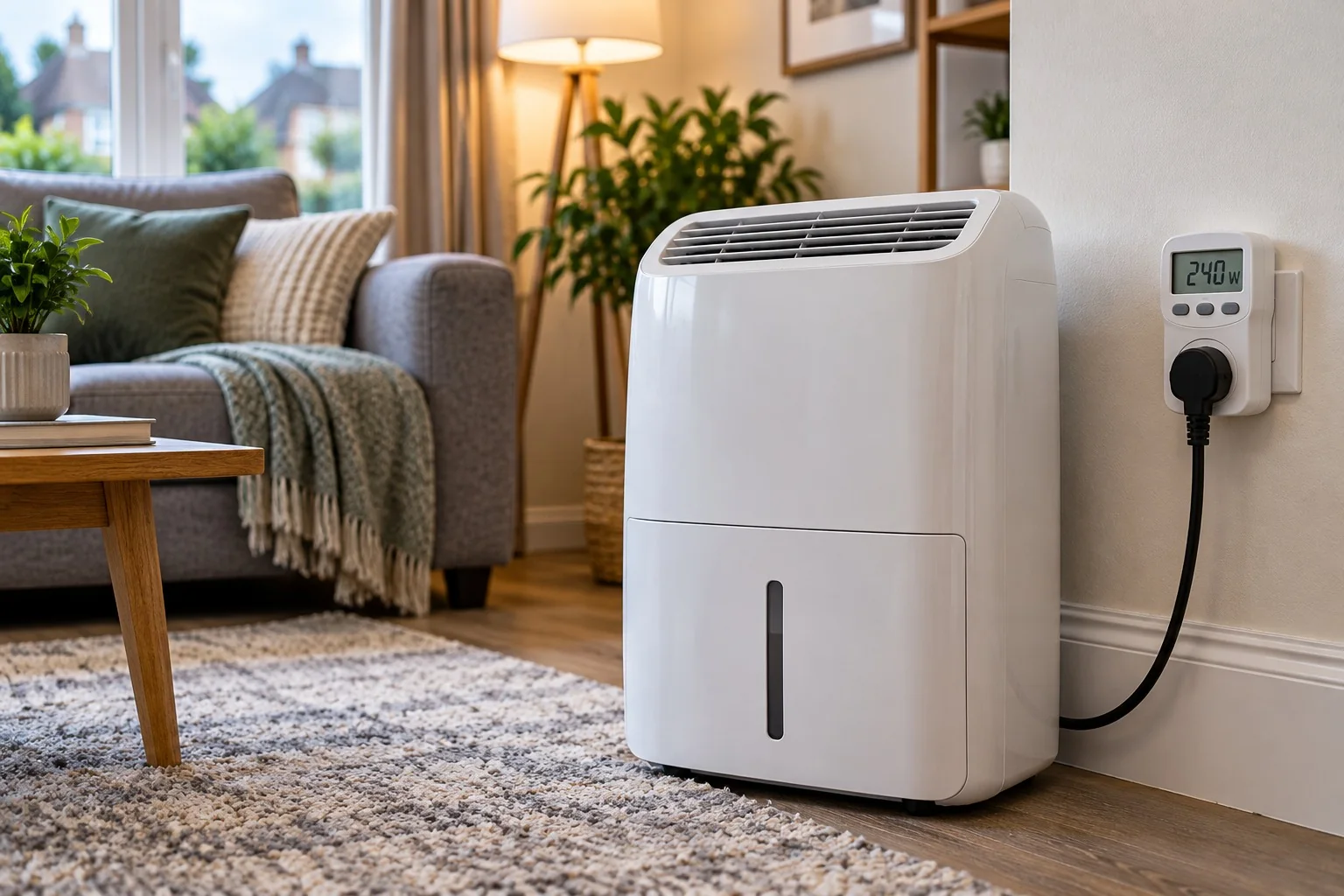
What the numbers mean
A dehumidifier can run hard after showers, laundry drying or in a damp room, then cycle more once humidity falls. Runtime is driven by the moisture load and conditions, not just the timer.
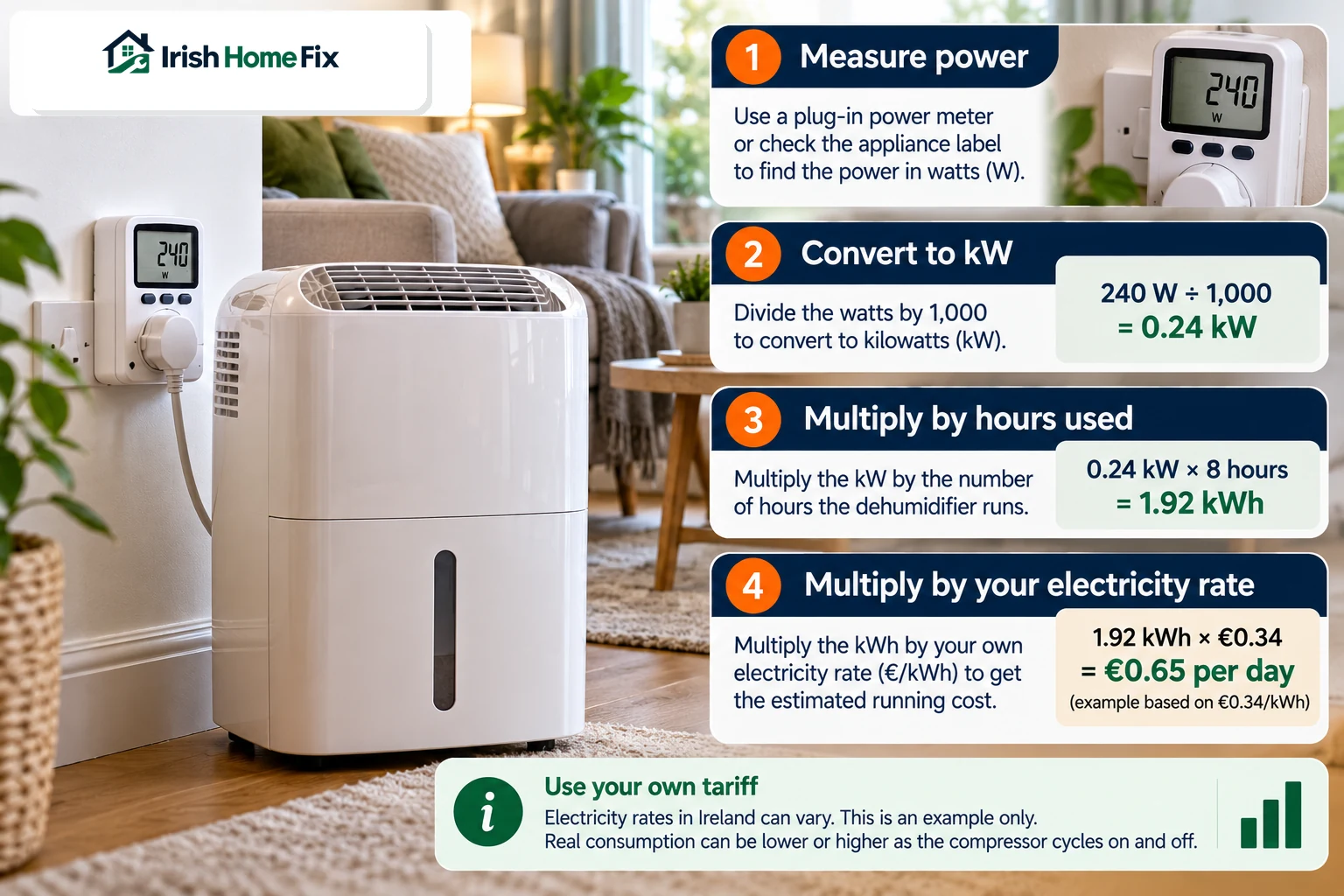
Measure a representative day rather than assuming full power all day
Compressor models and desiccant models behave differently, especially in cooler rooms. The most useful comparison is how much moisture is removed for the kWh used in the conditions you actually have.
A plug-in energy meter can measure many normal plug-in dehumidifiers where its current rating is suitable. This can show whether the compressor runs continuously or cycles.
What affects the cost
- Continuous mode rather than humidistat control.
- Laundry drying adding a large moisture load.
- Cold conditions extending compressor runtime.
- Dirty filters or restricted airflow.
- Trying to control moisture caused by an unresolved leak.
Inputs to check first
- Read the rated input power and model type.
- Set a sensible humidity target rather than maximum drying continuously.
- Record actual hours and cycling behaviour.
- Measure kWh with a suitably rated plug-in monitor where safe.
- Keep accessible filters clean according to the manufacturer.
What to do today
- Enter the actual tariff in the dehumidifier calculator.
- Measure one normal day or week.
- Use the unit in the room with the moisture source, following manufacturer guidance.
Common mistakes to avoid
- Do not use a dehumidifier instead of fixing an active leak.
- Do not block the air inlet or outlet.
- Do not use electrical equipment in unsafe wet/splash conditions.
When to get someone qualified involved
- The home has persistent leaks, damp patches or widespread mould.
- The unit overheats, trips the circuit or has electrical damage.
- Humidity remains high despite sensible ventilation, heating and dehumidification.
Irish-home context
SEAI recommends understanding appliance kWh and using energy monitors where appropriate. A credible Irish estimate uses your current bill rate rather than a fixed national price.
Frequently asked questions
How much does a dehumidifier cost per day?
It depends on kW draw, duty cycle, hours used and your unit rate.
Does it use full power all night?
Not necessarily. A humidistat-controlled unit may cycle once the target is reached.
Can a smart plug measure it?
A suitably rated energy-monitoring plug can measure many plug-in dehumidifiers.
Guidance and references
- SEAI — Be energy smart
- SEAI — Make visible the electricity used by appliances
- CRU — Your Electricity Bill
Irish Home Fix uses these references for general context. This guide is not a substitute for a site-specific building, electrical, plumbing or medical assessment.