
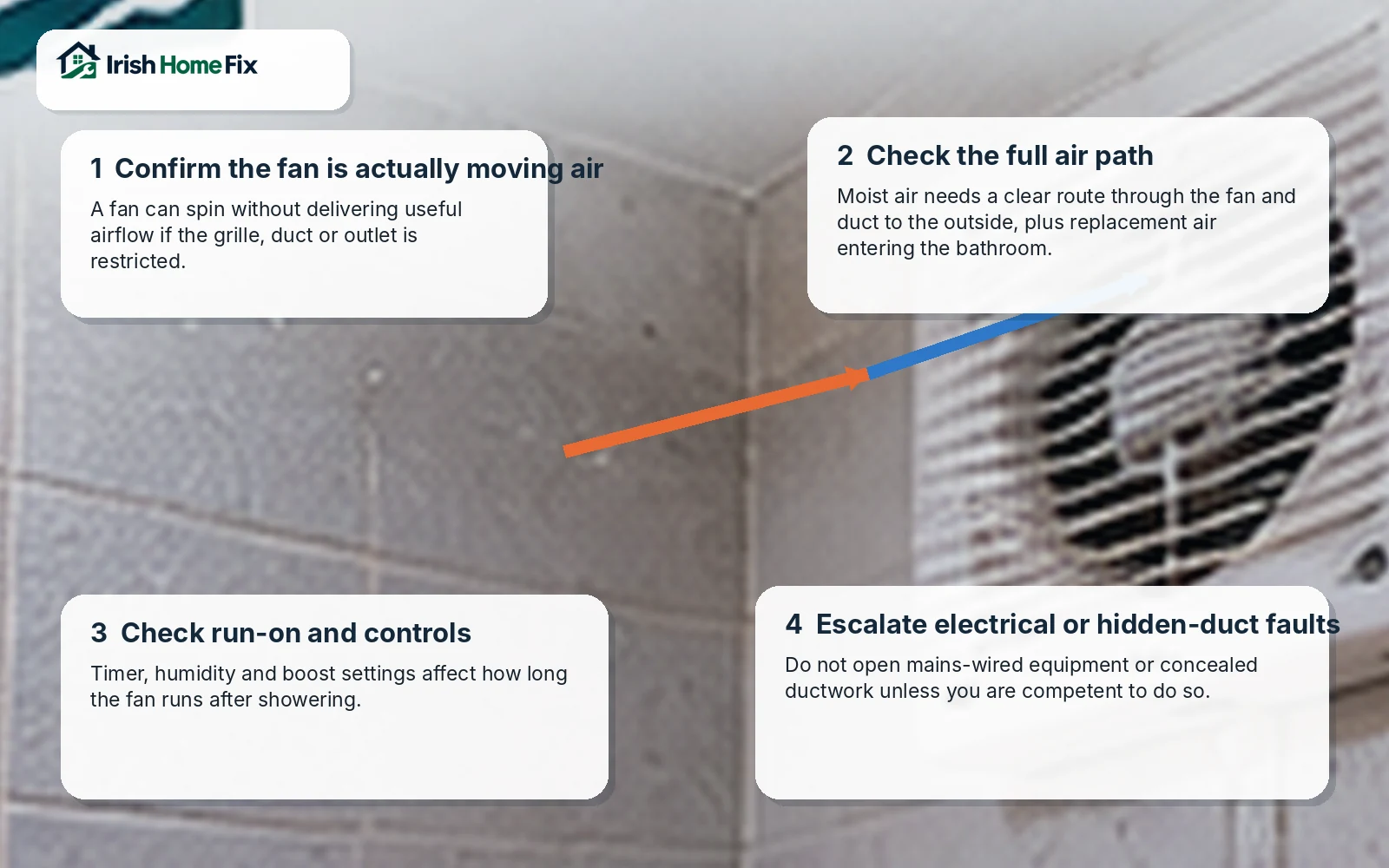
A fan can be switched on and still move too little air. Persistent condensation can result from a dirty grille, poor duct route, blocked outlet, inadequate run time or lack of replacement air into the room.
What this usually means
The key question is whether the fan actually clears moisture, not whether you can hear it. If the room stays wet for a long time after use, airflow or the overall ventilation setup needs checking.
A fan can be running without moving enough air
Hearing a fan does not prove that the required airflow is reaching outdoors. Dirty grilles, long or crushed ducting, restrictive external vents, back-draught shutters, poor make-up air or an undersized fan can all reduce effective extraction.
SEAI notes that wet-room extract ventilation is intended to remove water vapour rapidly, and where there is no background ventilator or openable window an intermittent system may require an automatic overrun. The exact arrangement depends on the home and ventilation design.
Likely causes
- Dirty or obstructed fan grille.
- Long, crushed or restrictive ducting.
- External outlet blocked or fitted with a restrictive grille.
- Fan running for too short a period.
- Insufficient air entering the room to replace extracted air.
- Cold walls, ceilings or windows causing condensation even with some extraction.
- Fan capacity not suited to the room or duct resistance.
Safe checks to make first
- Clean accessible covers and filters with the power safely isolated as the manufacturer directs.
- Check the external outlet visually from a safe location.
- Use the fan's timer or run-on mode if available.
- Check that the intended air path into the room has not been blocked.
- Do not open live electrical fittings or alter wiring yourself.
What to do today
- Check the grille for dust and make sure the external outlet is not visibly blocked from a safe location.
- Confirm that the fan discharges outdoors rather than into an attic, ceiling void or enclosed space.
- Check whether the door undercut or other designed air path is obstructed; an extractor cannot move much air if replacement air cannot enter the room.
What not to do
- Do not dismantle or rewire a mains-powered fan unless you are competent to do so.
- Do not assume a stronger fan is always the answer before checking duct restriction and air paths.
- Do not block the bathroom vent because the room feels cold.
When to get someone qualified involved
- The fan needs electrical testing or replacement.
- Ducting is hidden, inaccessible or may discharge into the attic.
- There are signs of water damage or persistent mould.
- The ventilation system is part of a whole-house mechanical system and may need commissioning or balancing.
Irish-home context
SEAI distinguishes between background ventilation and mechanical extraction in wet rooms. Both the air supply and the extraction path matter; simply installing a fan does not guarantee that the designed airflow is being achieved.
Frequently asked questions
Why is there still condensation if the fan is on?
The moisture load may be high, the fan may not be moving its rated airflow, the duct may be restricted, or cold surfaces may still condense moisture faster than the room dries.
Can I test a fan with a piece of tissue?
A simple tissue check may show that air is moving at the grille, but it does not measure actual airflow or confirm the duct and external discharge are performing correctly.
Should the fan keep running after I leave?
Many wet-room systems use an overrun or humidity control. SEAI notes that certain intermittent extract setups without other background ventilation should include a 15-minute automatic overrun.
Guidance and references
Irish Home Fix uses these references for general context. This guide is not a substitute for a site-specific building, electrical, plumbing or medical assessment.